
Last updated November 15, 2026
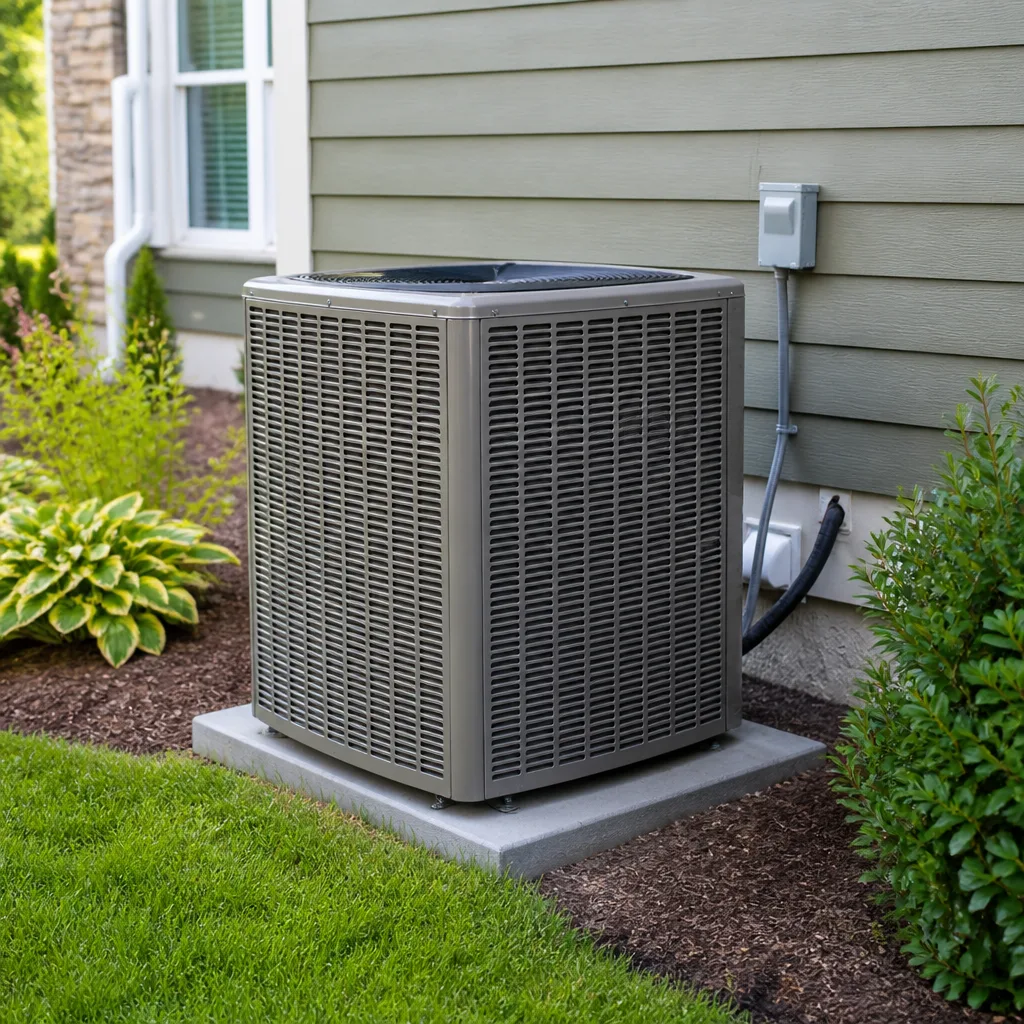 AC repair
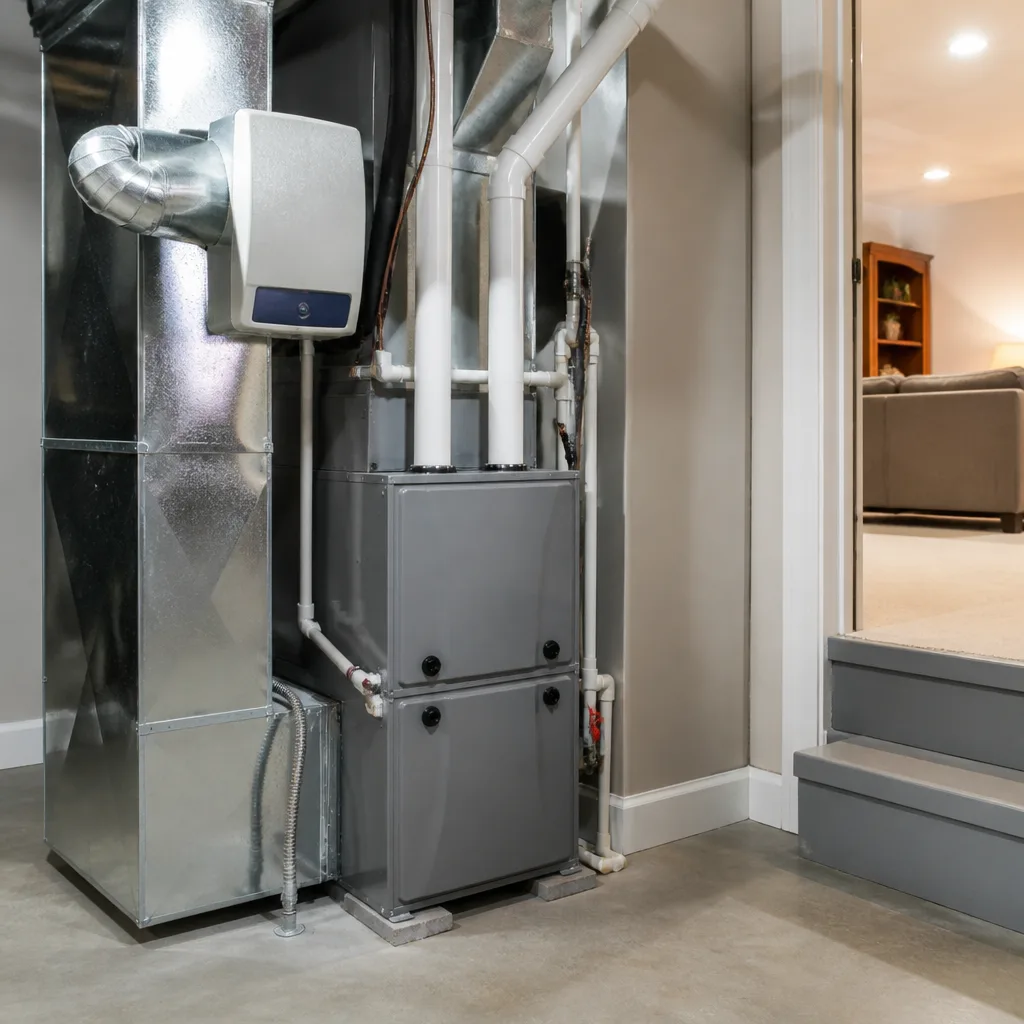 Furnace & heating
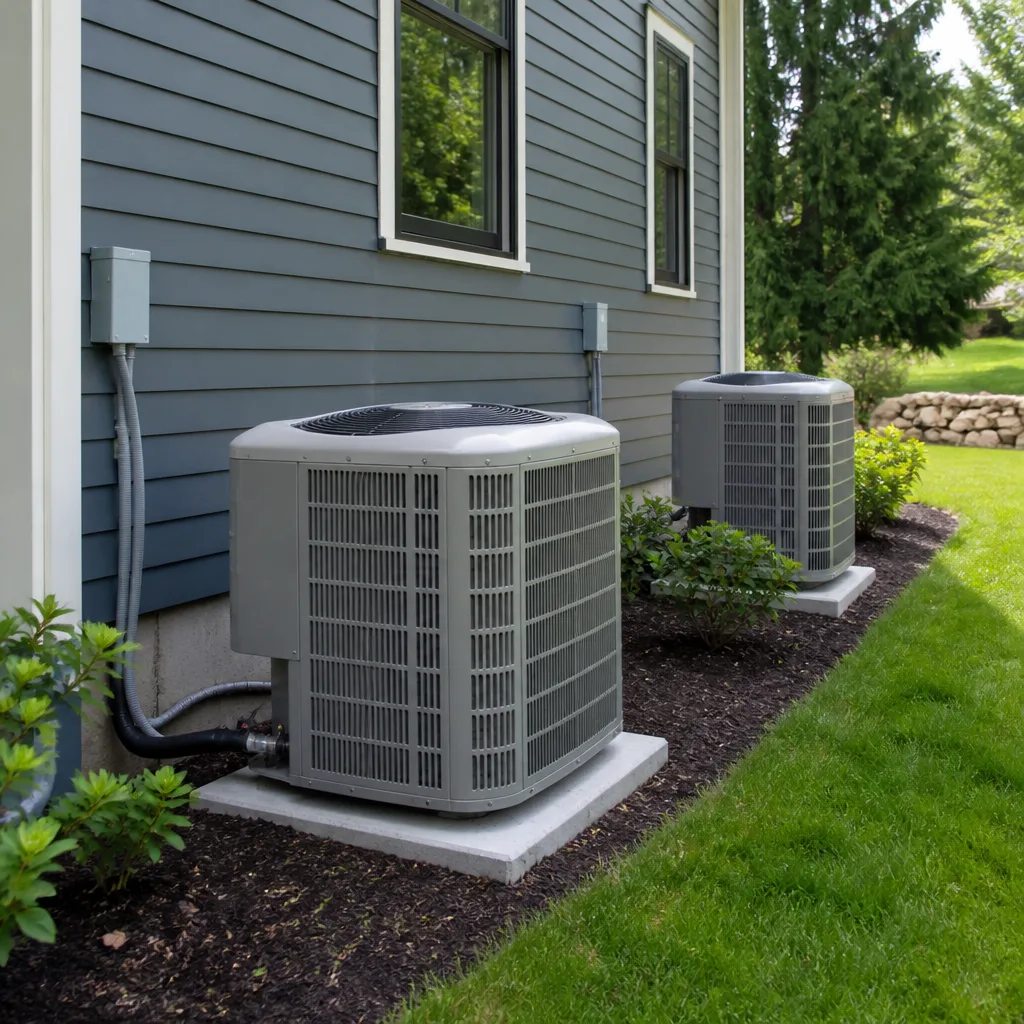 Heat pumps
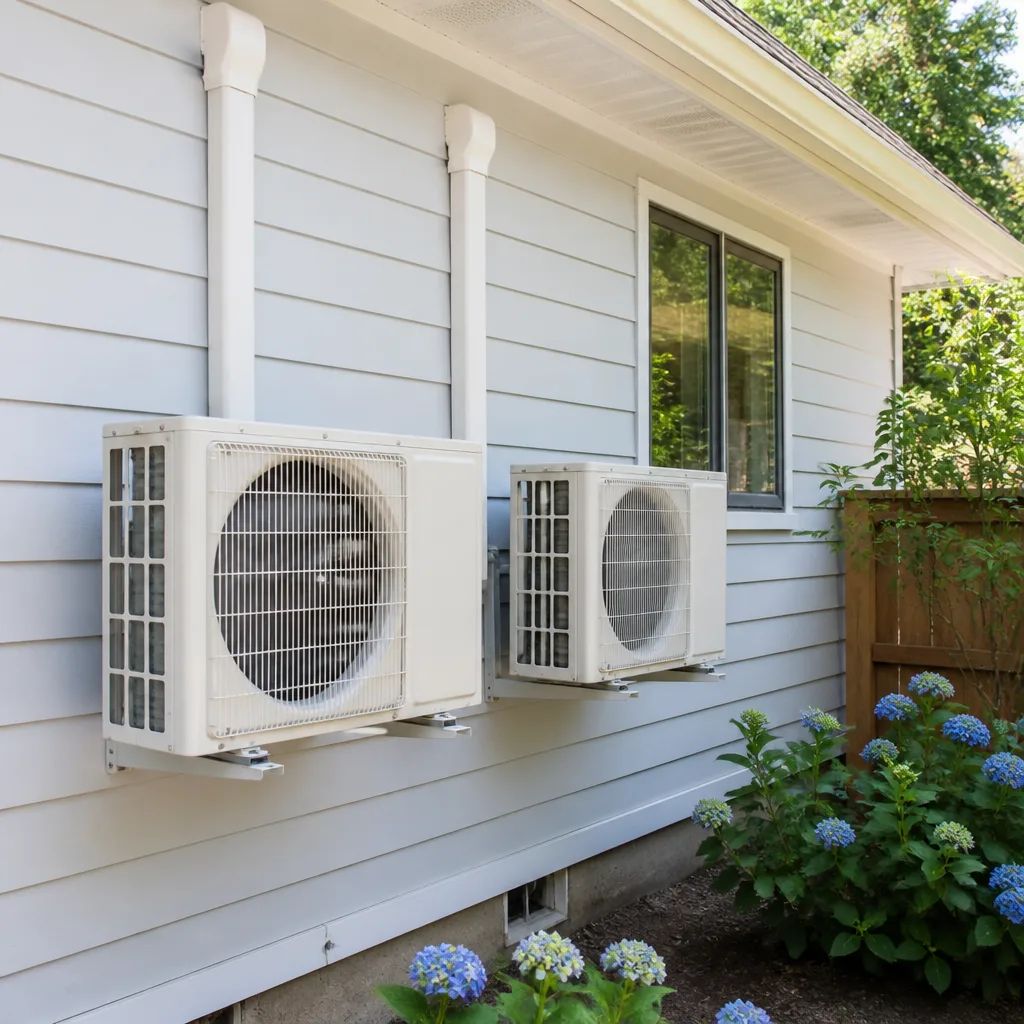 Ductless mini splits
 Carrier
 Trane
 Goodman
Seasonal tune-up and full diagnostic on your Carrier, Trane, or Goodman system - readings shown to you before any repair is proposed
Diagnosis first, numbers second - you approve the repair price before a single part goes in.
Get your free estimateHVAC Permits, Codes & Inspections in Spring Hill, FL: What You Need to Know
Most homeowners assume a new air conditioner is just an appliance swap. It isn’t. In Hernando County, replacing a system is a building permit event, and the paper trail matters more than the equipment. Here’s the part that surprises people: the risk isn’t usually a fine during the install. It’s the discovery at resale, years later, when a buyer’s inspector finds a system with no permit record and the closing table stalls while you sort out compliance. This guide covers exactly which HVAC jobs trigger a permit in Spring Hill, what a Florida mechanical inspection actually looks at, how to check permit history on a property, and what to do if you already own unpermitted work.
Quick Answer
In Spring Hill and the rest of Hernando County, a full HVAC system replacement requires a building permit and a mechanical inspection. A refrigerant recharge or a routine repair generally does not. A coil-only or air-handler-only swap usually does, because it’s a component replacement under the Florida Building Code. When in doubt, the Hernando County building department is the authority, and a contractor who hesitates to pull a permit is telling you something.
Styles & brands we work with
- AC repair
- Furnace & heating
- Heat pumps
- Ductless mini splits
- Carrier
- Trane
- Goodman
Table of Contents
- Which HVAC jobs trigger a permit in Hernando County?
- How to look up permit history on a Spring Hill property
- What a Florida residential mechanical inspection actually checks
- The Florida Building Code provisions that hit HVAC hardest
- After-the-fact permitting: what it involves
- How to verify your contractor pulls permits
- Common mistakes to avoid
- Frequently asked questions
Which HVAC jobs trigger a permit in Hernando County?
The line isn’t “big job versus small job.” It’s “equipment replacement versus repair.” Anything that removes and replaces a listed component, or adds new equipment, generally needs a permit. Anything that services existing equipment in place generally doesn’t. Here’s how that breaks down in practice for Spring Hill homeowners.
Needs a permit:
- Full system replacement, condenser and air handler together
- Condenser-only or air-handler-only replacement
- Coil-only replacement in most cases, because the coil is a listed component of the system
- Duct system replacement or significant duct modification
- New mini-split or ductless system installation
- Any change to the electrical circuit feeding the equipment
Doesn’t need a permit:
- Refrigerant recharge or leak repair on existing equipment
- Capacitor, contactor, blower motor, or thermostat replacement
- Routine maintenance and tune-ups
- Cleaning a condensate drain line
- Diagnostic work
The coil-only question is the one that catches people. A contractor swapping a leaking evaporator coil without a permit is saving paperwork, not saving you money. The coil is part of a permitted system, and inspectors want to see the match. If your contractor tells you a coil swap “doesn’t need a permit,” ask them to confirm that with Hernando County directly before the work starts.
How to look up permit history on a Spring Hill property
You can check whether a permit was ever pulled for HVAC work on a Spring Hill address, and it’s worth doing before you buy a home and before you hire anyone. Hernando County maintains an online permit portal through its building department. The lookup is straightforward if you have the right information ready.
- Find the parcel number. Use the Hernando County Property Appraiser’s site and search by address. The parcel ID is what the permit system indexes on most reliably.
- Open the county building department’s online permit search. Search by parcel number first, address second. Address formats vary, so the parcel number avoids dead ends.
- Pull the full permit history, not just open permits. You want closed permits too. A system replaced without a permit simply won’t appear, which is the finding you’re looking for.
- Check the inspection record on each HVAC permit. A permit that was pulled but never passed final inspection is its own problem, and it’s more common than homeowners expect.
- Save or screenshot the results. If you’re in a purchase transaction, your agent and the title company will want the record in writing.
If you’re not sure what you’re looking at, a call to the building department clears it up faster than guessing at the portal. They’d rather answer the question than deal with the aftermath.
What a Florida residential mechanical inspection actually checks
The mechanical inspection for an HVAC replacement isn’t a pass/fail on whether the unit runs. It’s a check on whether the installation was done to code, and inspectors in Hernando County look at the same core items on nearly every residential job. Knowing what they check is the best defense against a failed inspection and a second trip.
- Refrigerant line insulation. The suction line needs to be insulated along its full run, with no gaps at the wall penetration or at the air handler. Frayed or missing insulation fails.
- Electrical disconnect. A service disconnect must be within sight of the condenser and properly rated. This is one of the most common corrections on a first inspection.
- Condensate drainage. The primary drain has to slope correctly and terminate properly. Where a secondary drain or float switch is required, it has to be there and functional.
- Equipment setback from the property line. Condenser placement has to respect the required setback. A unit pushed too close to a fence line or side yard is a problem that’s expensive to fix after the concrete pad is set.
- Clearance and access. The unit needs service access, and the attic air handler needs a code-compliant access path and working platform.
- Nameplate and match. The installed equipment has to match what was permitted, with the model and serial numbers documented.
In our experience, the corrections that come up most on Spring Hill jobs are the disconnect rating and the condensate termination. Both are cheap to get right during the install and annoying to fix afterward. A contractor who plans for the inspection before the first day of work rarely fails one.
The Florida Building Code provisions that hit HVAC hardest
The Florida Building Code governs how HVAC equipment is installed in this state, and it gets updated on a code cycle. Two areas matter most to Spring Hill homeowners: equipment efficiency minimums and installation requirements.
On efficiency, the code sets minimum efficiency ratings for new equipment, and those minimums have moved across recent code cycles. What that means practically is that the equipment a contractor would have installed a decade ago may no longer meet the current minimum for a new install. When you get quotes, ask each contractor to state the efficiency rating of the equipment they’re proposing and confirm it meets the minimum required under the code edition Hernando County is currently enforcing. That’s a fair question and the answer should be quick.
On installation, the code covers the parts homeowners rarely think about: condensate management, electrical disconnection, refrigerant piping protection, equipment access, and duct sealing. It also sets requirements for the load calculation that should precede a system replacement. A contractor sizing a new system by square footage alone, or by matching whatever was there before, isn’t doing the job to the standard the code assumes.
One more thing worth knowing: the code edition a county enforces can lag the state’s most recent edition while local amendments are adopted. If you want to know exactly which edition applies to your Spring Hill project, the Hernando County building department will tell you. That’s a better source than any contractor’s memory, including ours.
If you’re planning a replacement rather than a repair, the code requirements are one of the reasons we push for a real load calculation and a written scope before anything gets ordered. You can read more about how we handle that side of the work on our AC installation page.
After-the-fact permitting: what it involves
If you bought a Spring Hill home with unpermitted HVAC work, you have a path to compliance, and it’s called after-the-fact permitting. It’s not quick and it’s not free, but it’s far cheaper than discovering the problem during a closing. Here’s how the process usually runs.
- Contact the Hernando County building department and explain what you have. They’ll tell you what an after-the-fact permit application requires for your specific situation.
- Expect documentation of what was installed. Model and serial numbers, the install date if known, and any equipment literature. If the installing contractor is still findable, get the paperwork from them.
- Plan for an inspection of work already in place. This is the hard part. Some items are visible; others aren’t. If the inspector can’t confirm a concealed item, they may require access, which can mean opening a wall or a ceiling.
- Budget for corrections. Unpermitted work tends to have a reason it wasn’t permitted. Electrical shortcuts, missing disconnects, and unsealed penetrations are common finds and they’ll need to be fixed.
- Get the permit closed. A closed permit with a passed inspection is the record that matters. An open permit is worse than no permit in some transactions, because it flags the property.
If you’re buying a home in Spring Hill and the inspection turns up an HVAC system with no permit record, this is negotiable at the table. It’s much easier to make the seller handle after-the-fact permitting before closing than to take it on yourself afterward.
How to verify your contractor pulls permits
The single best protection against a permitting problem is hiring a contractor who treats permits as part of the job, not an optional add-on. You can verify that in a few minutes before signing anything.
- Ask directly, in writing. “Will you pull the permit for this job, and will the permit be in your name or mine?” The answer should be immediate and unambiguous.
- Confirm the contractor is properly licensed and insured. A contractor who isn’t in good standing can’t pull permits, and that’s usually why they suggest skipping them.
- Check the permit is actually issued before work starts. Once you have the application number, the county portal will show it as issued. A contractor who starts work “while the permit is processing” is taking a risk on your property.
- Confirm the final inspection passes. The permit closing with a passed inspection is the end of the process. Ask for the record.
One related point: not every HVAC problem is a permitting problem. A system that’s blowing warm air, short-cycling, or making noise is a diagnostic call, not a permit call. If that’s where you are, our furnace repair and cooling diagnostic work covers the repair side, and we’ll tell you honestly when a repair makes sense and when a replacement does.
Common Mistakes to Avoid
- Taking “we don’t need a permit for that” at face value. The contractor who says it is often the one who’d have to pay for the permit. Confirm the requirement with Hernando County directly if the answer feels convenient.
- Skipping the permit lookup before buying a Spring Hill home. The permit history is public and free. Not checking it is a self-inflicted surprise at closing.
- Assuming the previous owner’s permit is closed. An open permit on an HVAC system is a red flag at resale. Pull the inspection record, not just the permit application.
- Letting the equipment get ordered before the load calculation. Sizing by square footage in this climate leads to short cycling, humidity problems, and higher bills. The load calculation should precede the purchase order.
- Ignoring the efficiency minimum question. If a quote doesn’t state the efficiency rating of the proposed equipment, ask. The code minimums have moved, and a unit that’s not current is a resale liability.
- Treating a failed inspection as the contractor’s problem alone. It’s your permit and your property. Every failed inspection extends the timeline and puts a correction on the record.
- Hiring a single-brand dealer without comparing. A dealer locked to one manufacturer will recommend that brand whether or not it fits your home. The permits and inspections are the same either way, so the brand decision should be made on the home’s needs, not on a dealer agreement.
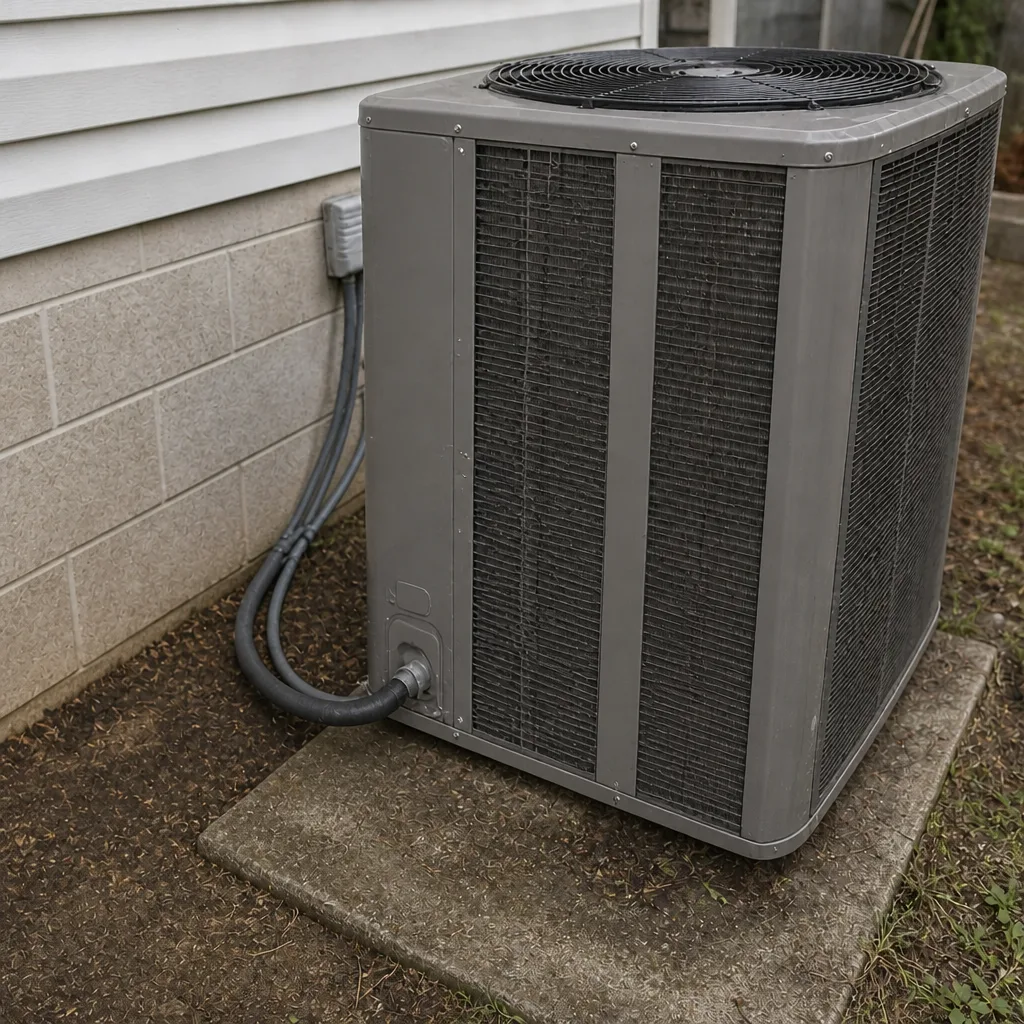
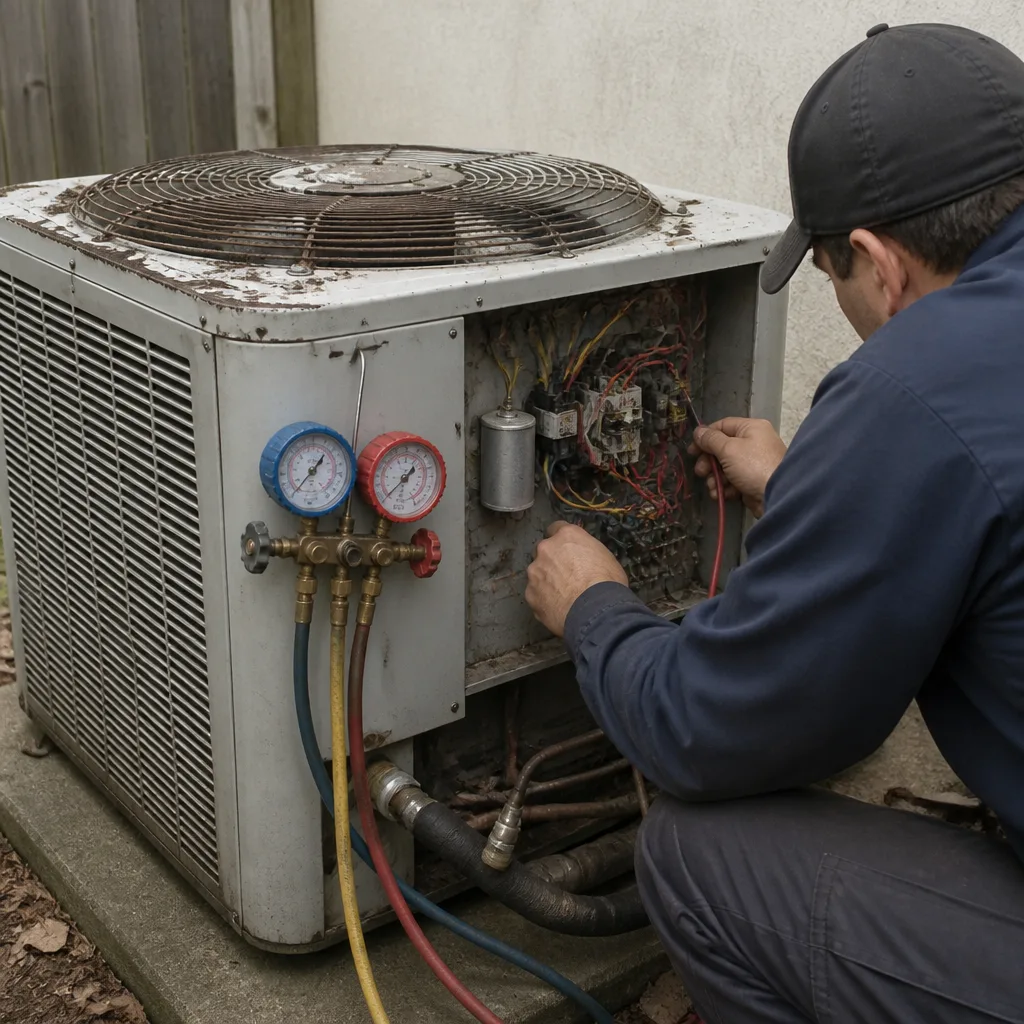
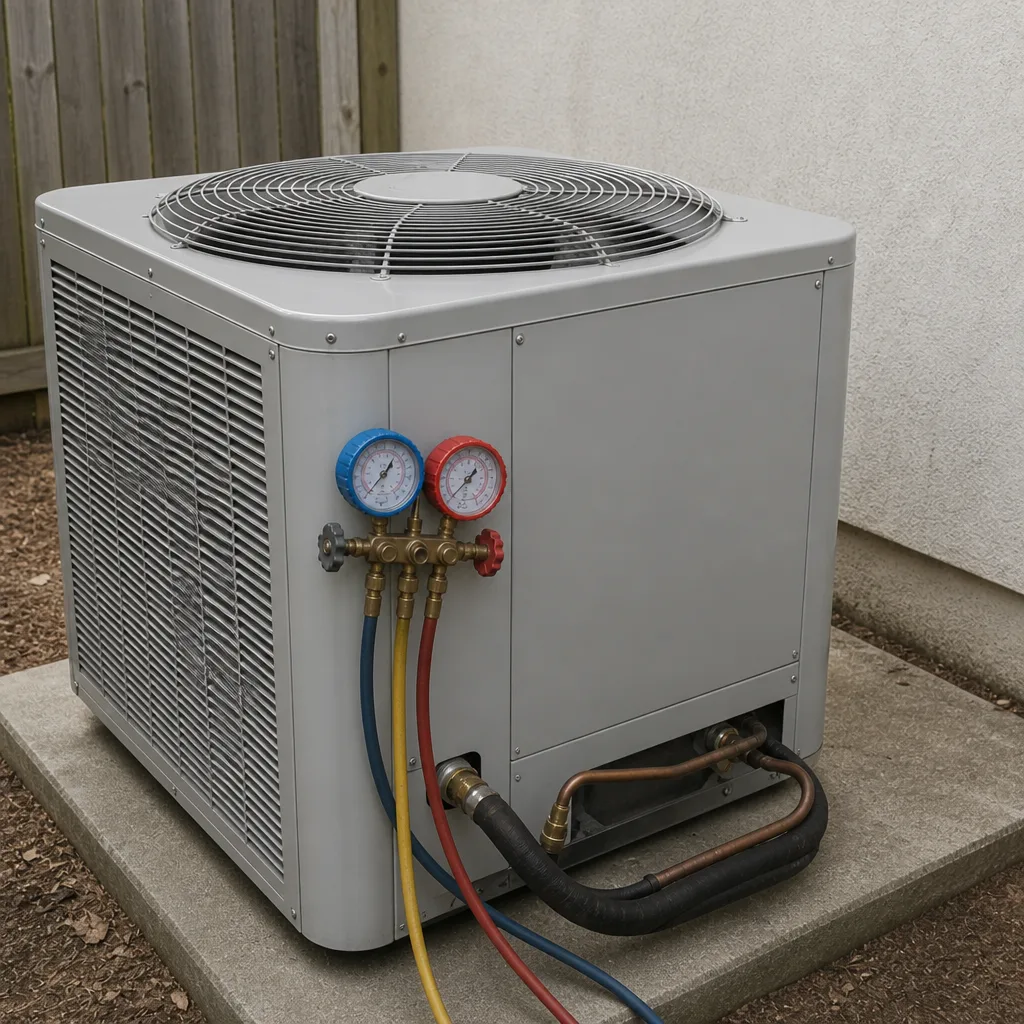
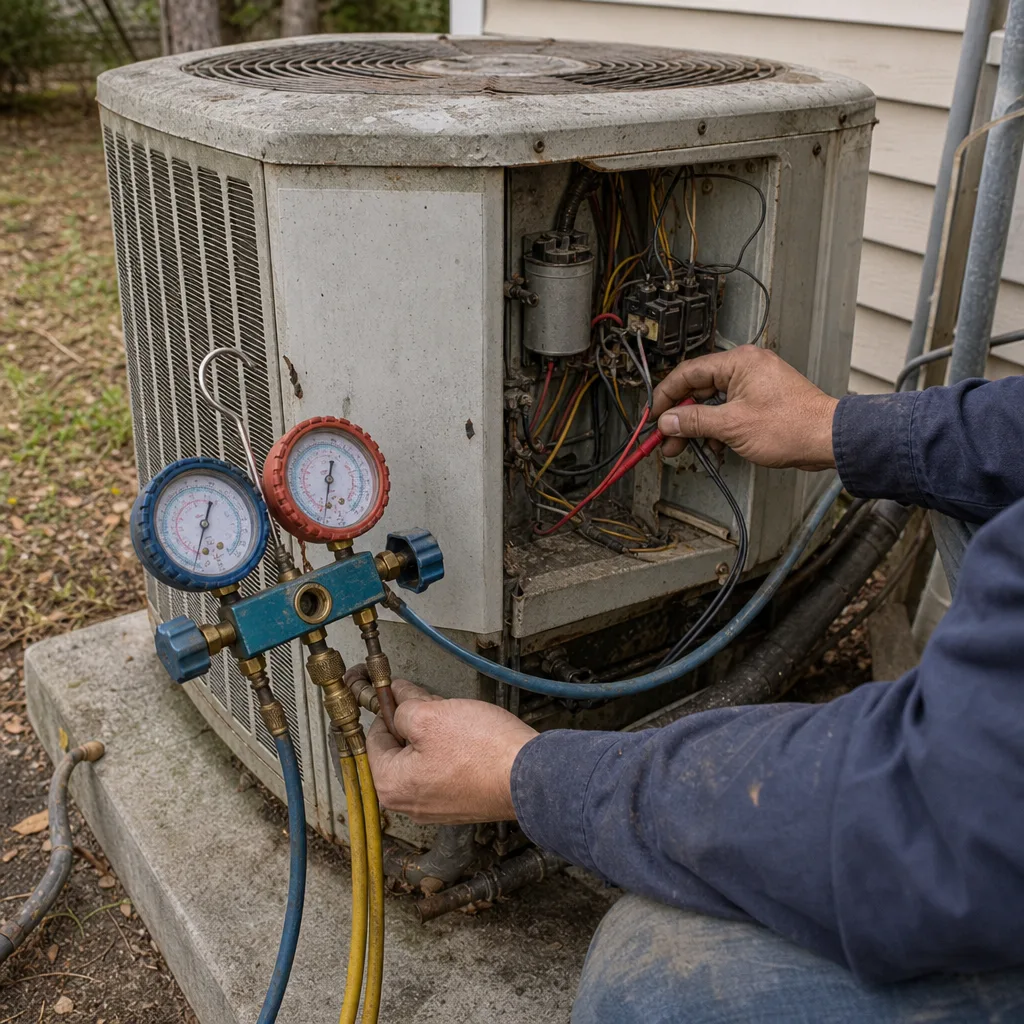
See the difference
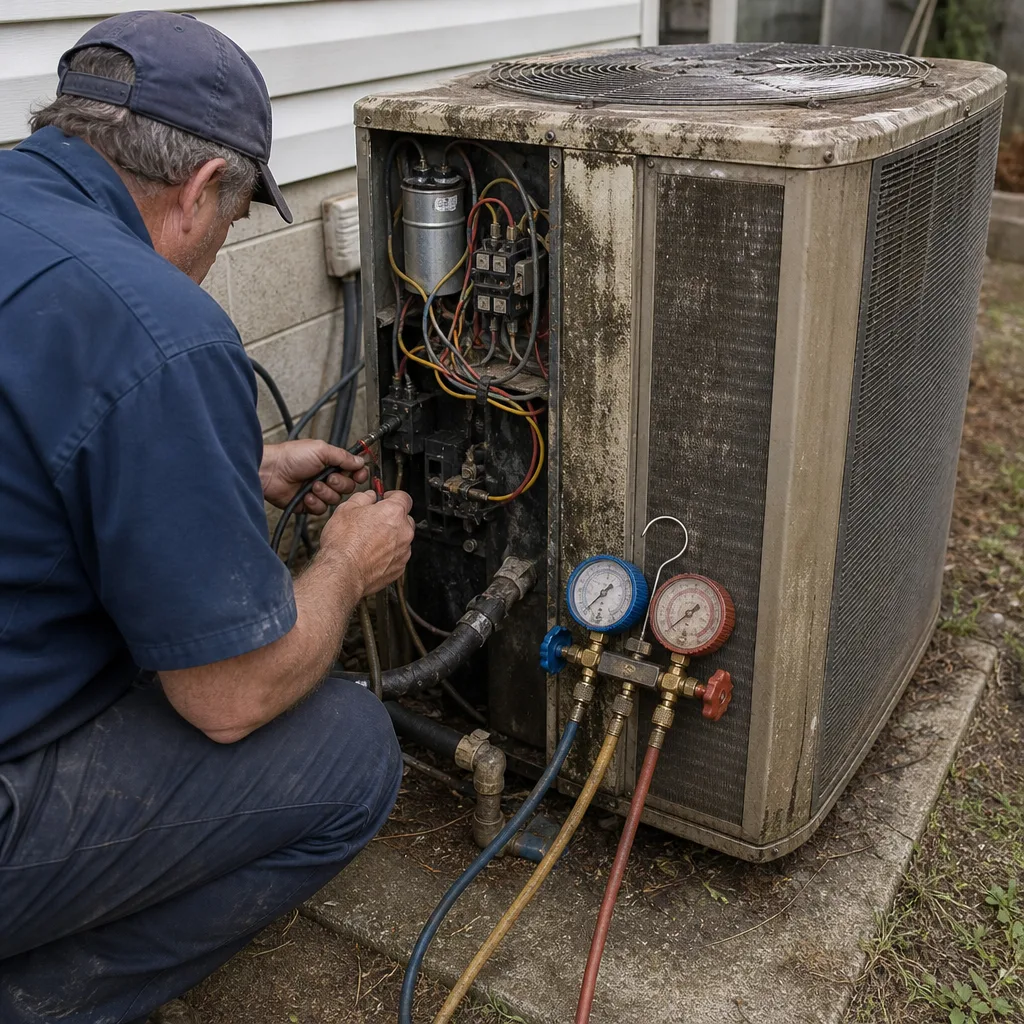 Before
 After
 Before
 After
 Before
 After
When to Call a Professional
Some permitting questions can wait for business hours. Some can’t. If your system has failed and you’re weighing repair against replacement, the permitting question is part of the conversation, and it should be answered before anyone orders equipment. If you’re in a purchase transaction and the permit history looks wrong, that’s urgent in a different way, because it’s negotiable now and much harder to negotiate later. If a contractor has started work without a permit and the county has contacted you, call us before the situation gets more complicated.
Our technicians have up to experience, and we work on the equipment you already own, from Carrier and Trane to Bryant and American Standard. We don’t refuse a job because of the brand on the nameplate. Ironside AC Repair offers free estimates in Spring Hill. Call (833) 946-7618. We answer 24/7. Fast dispatch from 7am to 7pm, Sunday through Friday.
Frequently Asked Questions
Yes. A full HVAC system replacement in Spring Hill and the rest of Hernando County requires a building permit and a mechanical inspection. The permit is pulled before work starts, and the job isn’t officially complete until the final inspection passes. Call (833) 946-7618 for a free estimate. We answer 24/7. Fast dispatch from 7am to 7pm, Sunday through Friday.
No. Adding refrigerant to an existing system, leak repair on existing equipment, and component swaps like capacitors or blower motors are repair work and don’t trigger a permit. Replacing the equipment itself is what changes the category. If you’re unsure which side of the line your job falls on, the Hernando County building department is the authority and they answer the question quickly.
The buyer’s inspector will likely find it, and the permit record won’t match the equipment. The usual outcome is that the work has to be brought into compliance through after-the-fact permitting, which can mean opening walls to verify concealed items if the inspector can’t confirm them another way. That’s a problem best solved before the closing table rather than after. Call (833) 946-7618 to talk through your options. We answer 24/7. Fast dispatch from 7am to 7pm, Sunday through Friday.
In most cases, yes. A coil is a listed component of a permitted system, and Hernando County generally treats a coil swap as a component replacement that requires a permit and an inspection. The distinction matters because some contractors skip the permit on a coil job to keep the paperwork light. Ask yours to confirm the requirement with the county before the work begins.
Use the Hernando County Property Appraiser’s site to find the parcel number, then search the county building department’s online permit portal by parcel number. Pull the full history, including closed permits, and check the inspection record on each HVAC permit. If a system replacement doesn’t appear at all, it wasn’t permitted. Call (833) 946-7618 for a free estimate if you want an assessment of the system itself. We answer 24/7. Fast dispatch from 7am to 7pm, Sunday through Friday.
Inspectors check the refrigerant line insulation, the electrical disconnect rating and location, condensate drainage and termination, equipment setback from the property line, service access, and the equipment nameplate to confirm it matches the permit. The inspection is about installation quality, not whether the unit runs. If you want the install done right the first time, and you’re in the Spring Hill area, we’re happy to walk you through it.
The Bottom Line
Permits aren’t bureaucracy for its own sake. In Hernando County, the permit and the inspection record are the paper trail that proves your HVAC work was done to the Florida Building Code, and that record is what a buyer’s inspector will look at years from now. Full replacements, component swaps, and duct work need permits. Repairs and recharges generally don’t. The efficiency minimums and installation requirements in the code have moved, so ask about both before equipment gets ordered. If you own a Spring Hill home with unpermitted work, after-the-fact permitting is a real path and a better one than waiting for a closing to discover it. Call (833) 946-7618 for a free estimate. We answer 24/7. Fast dispatch from 7am to 7pm, Sunday through Friday.
Written by the team at Ironside AC Repair.