
Last updated November 15, 2026
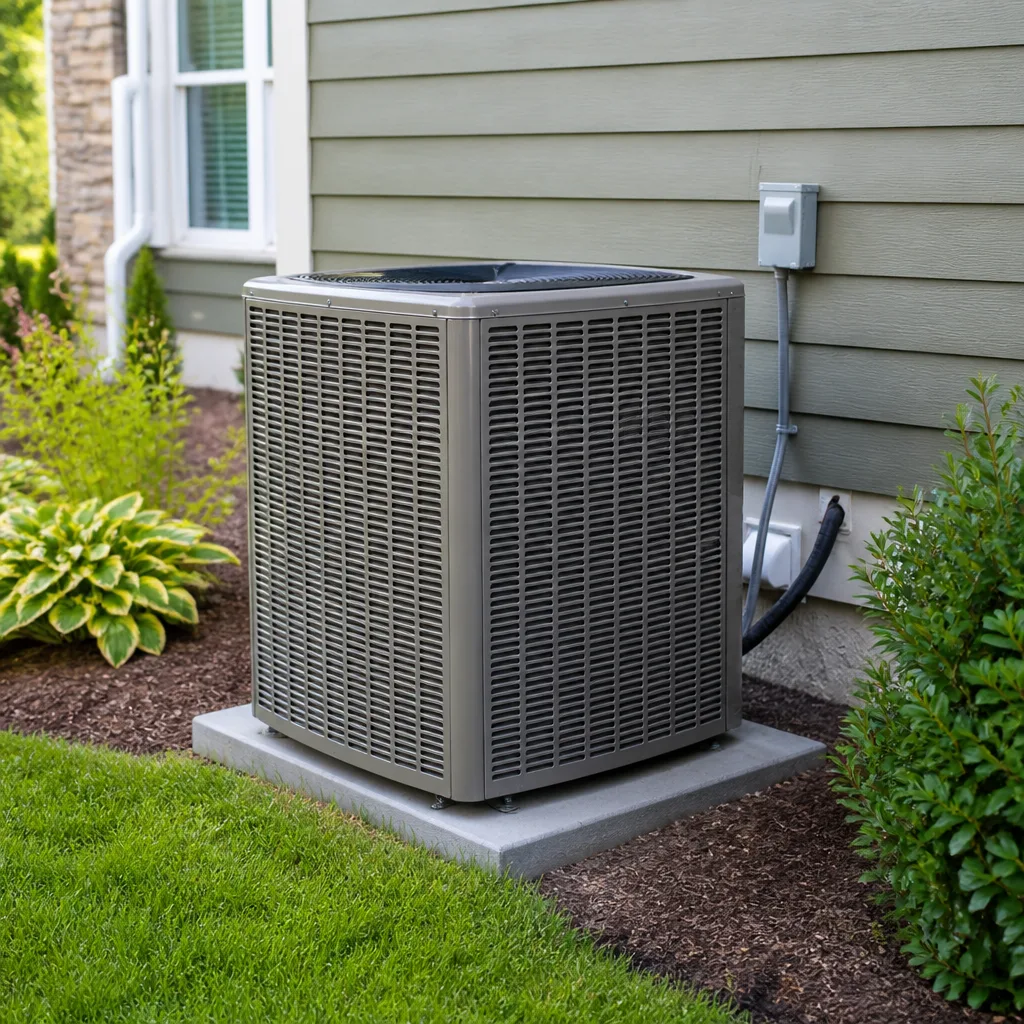 AC repair
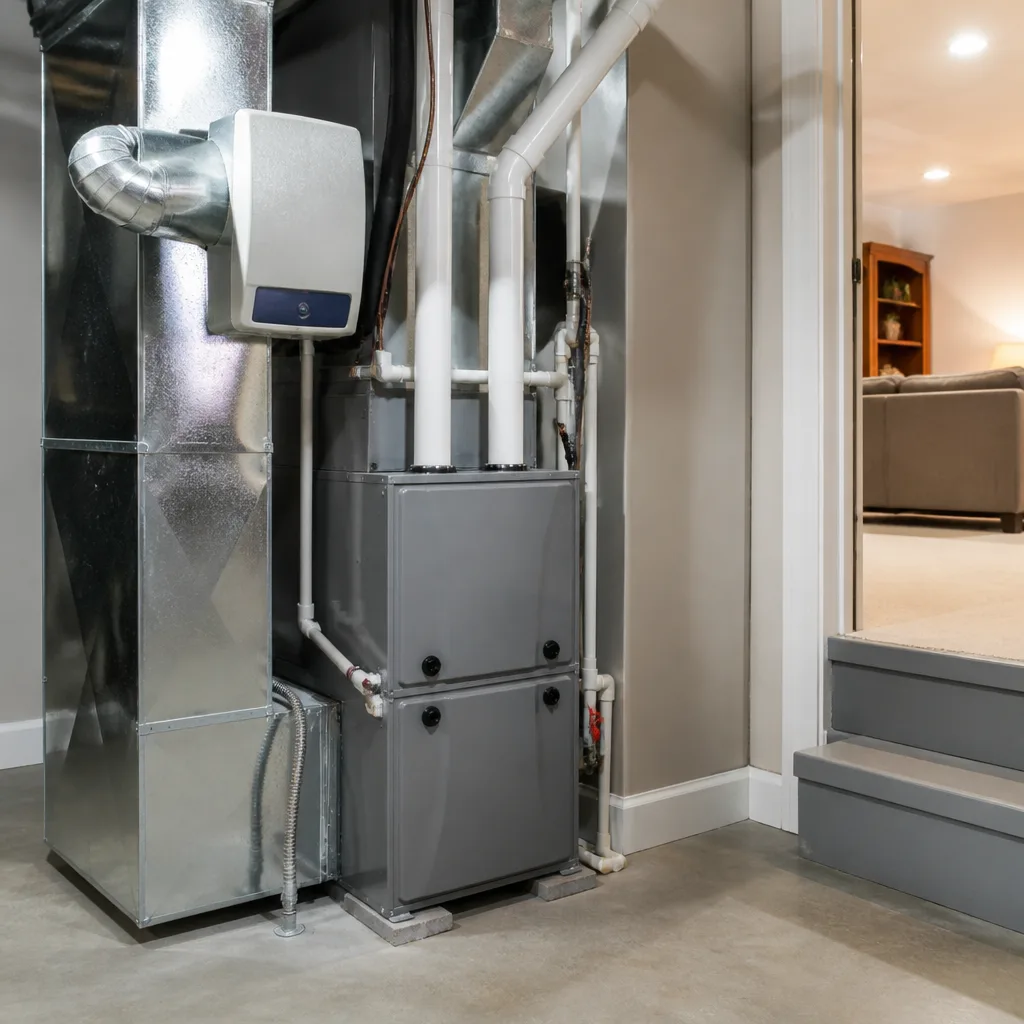 Furnace & heating
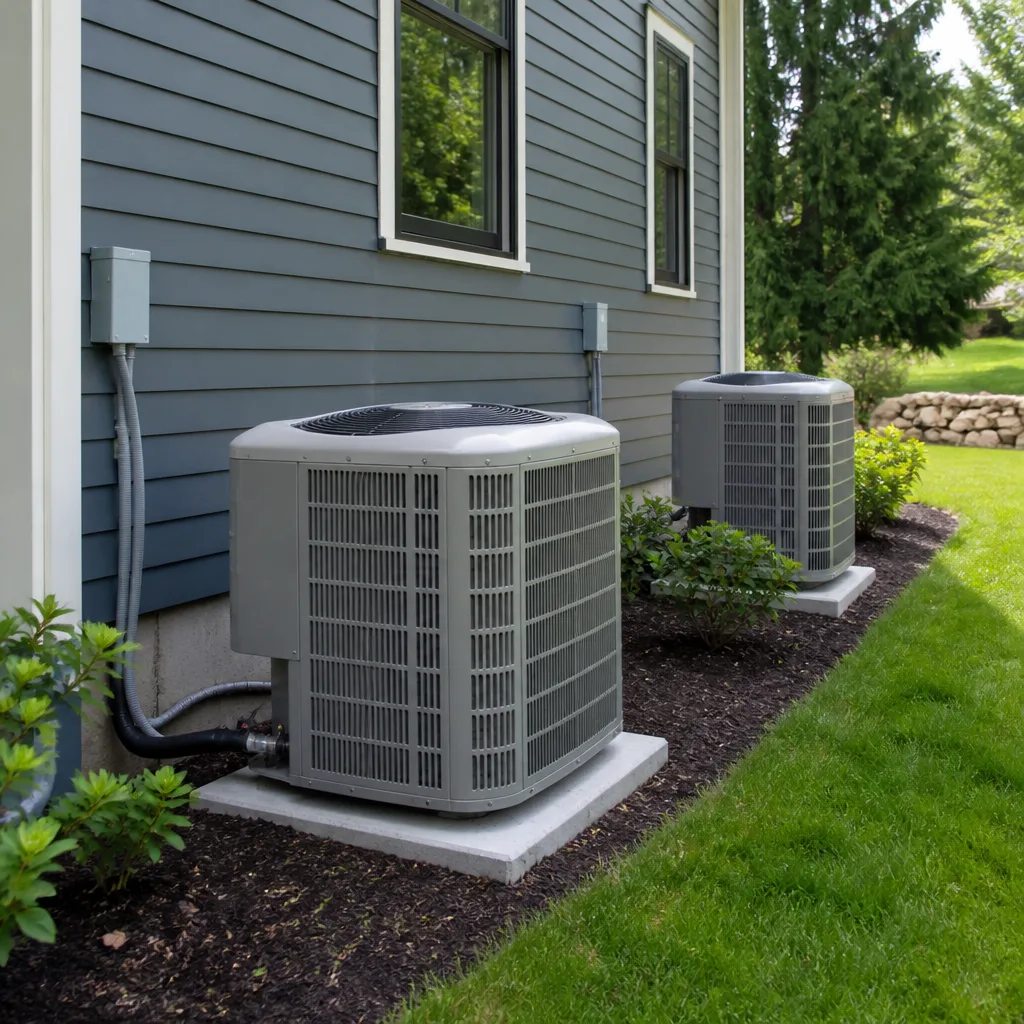 Heat pumps
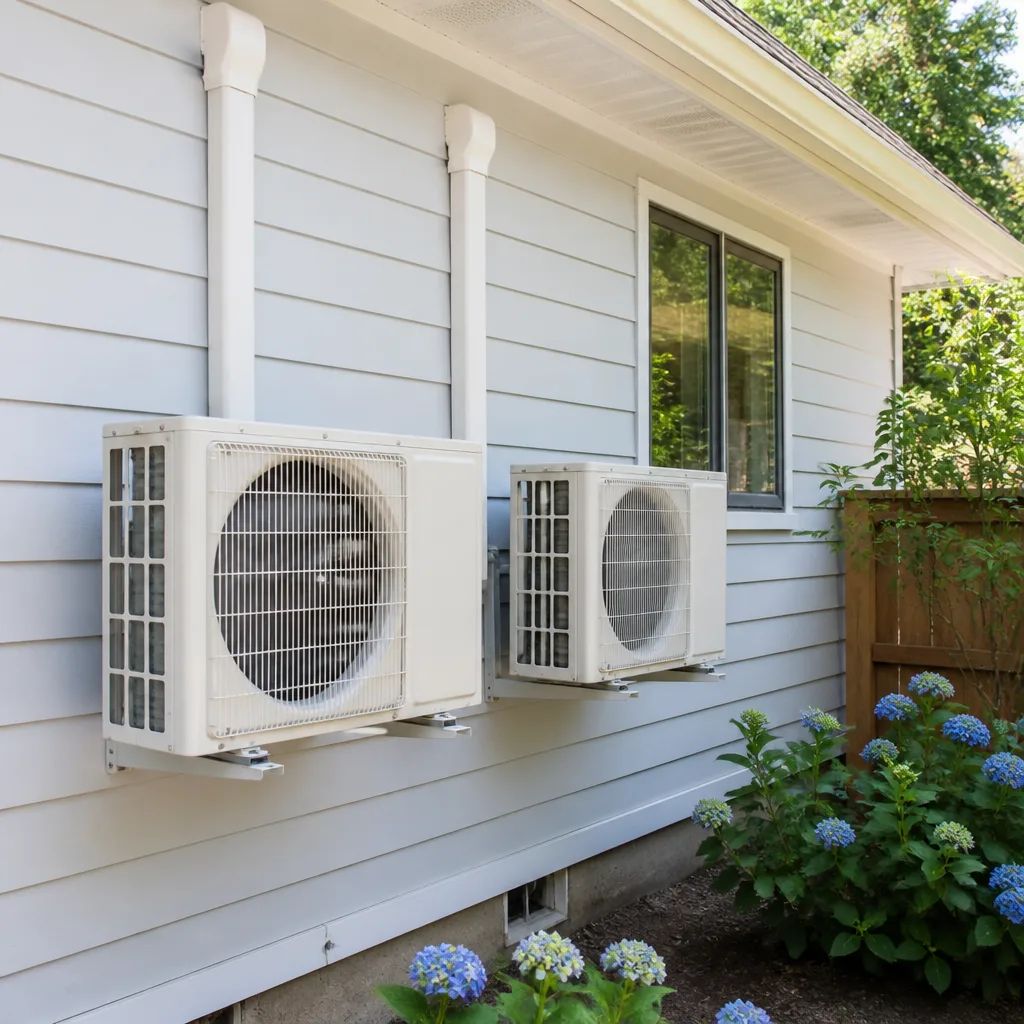 Ductless mini splits
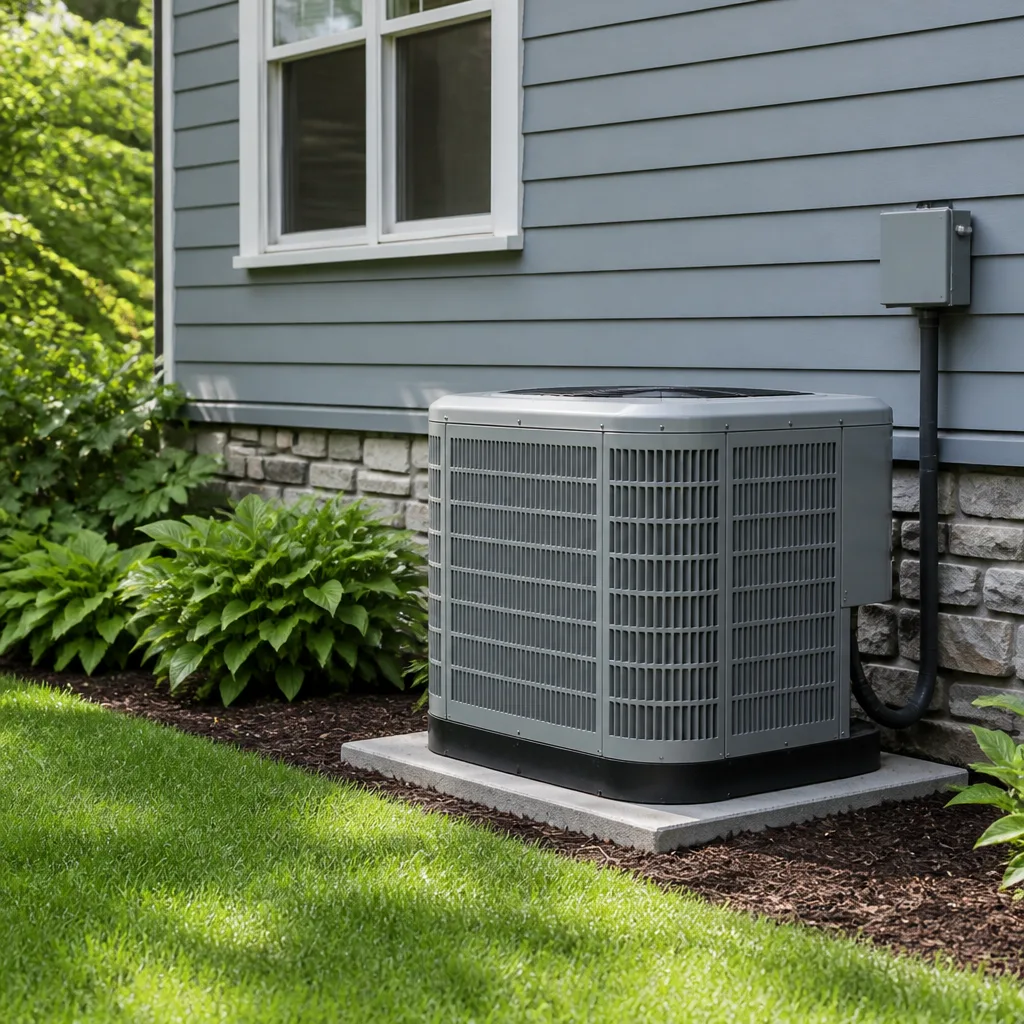 Carrier
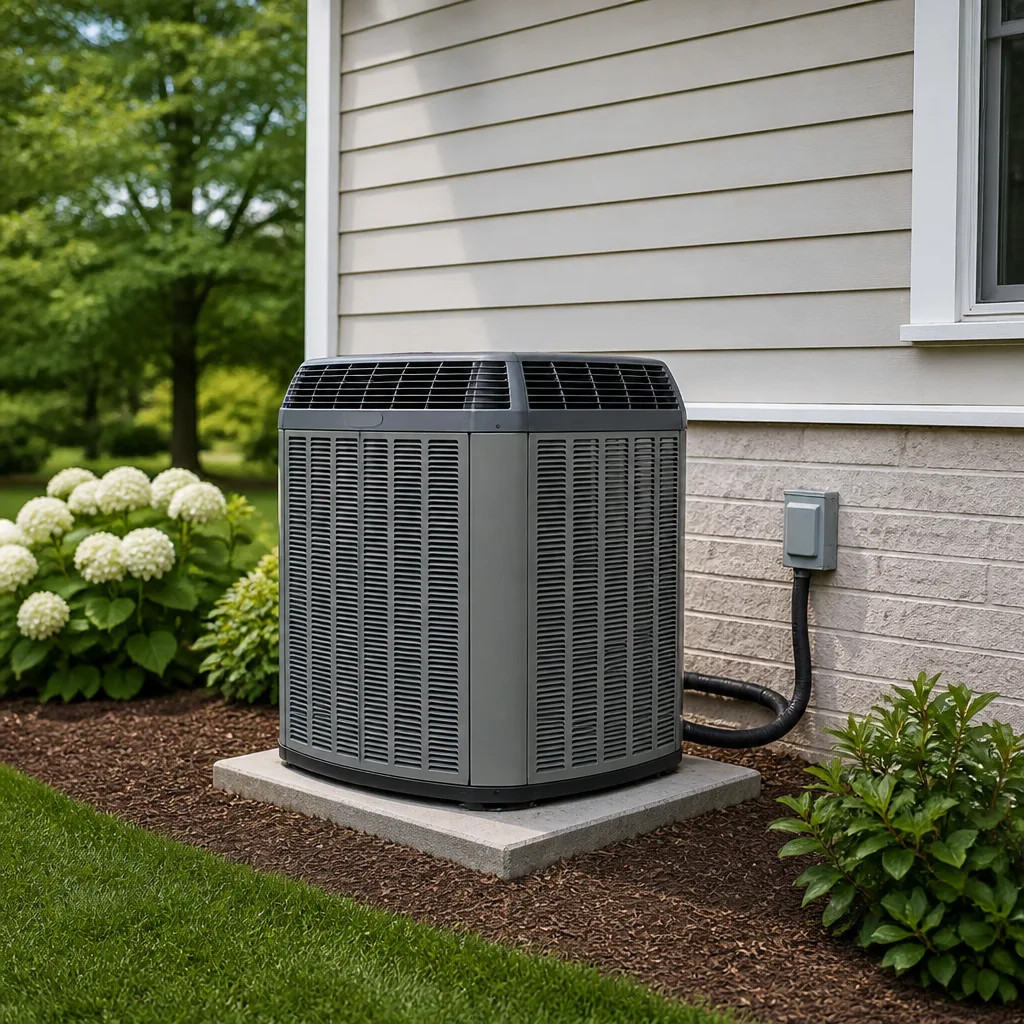 Trane
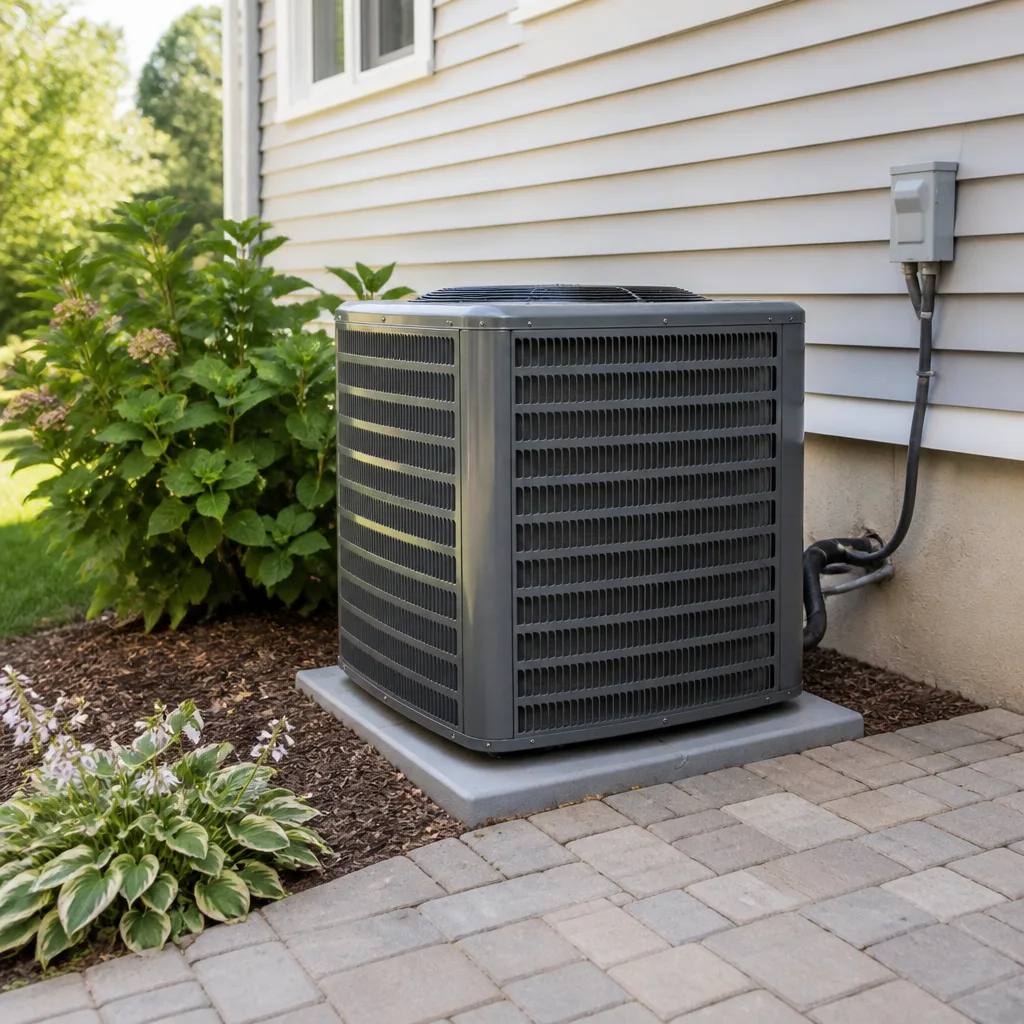 Goodman
Seasonal tune-up and full diagnostic on your Carrier, Trane, or Goodman system - readings shown to you before any repair is proposed
Diagnosis first, numbers second - you approve the repair price before a single part goes in.
Get your free estimateSeasonal HVAC Care for Spring Hill: Year-Round Homeowner’s Guide
Most homeowners here treat HVAC care as a summer job. That’s the mistake. Spring Hill doesn’t run on four equal seasons – it runs two heavy modes, cooling and a short heating stretch, joined by two transition windows where a small amount of maintenance decides whether your summer starts smoothly or starts with a breakdown. The single most valuable window is mid-February through early April, when systems sit off-peak and technicians actually have room in the schedule. Everybody calls in May, and everybody gets the worst availability of the year. This guide maps the work to the real Spring Hill calendar: what to check and when, what to track while the heat is on, and what to do in the brief cold snaps that catch people off guard.
Styles & brands we work with
- AC repair
- Furnace & heating
- Heat pumps
- Ductless mini splits
- Carrier
- Trane
- Goodman
Quick Answer
Seasonal HVAC care in Spring Hill follows a two-mode calendar, not a four-season one. The high-value maintenance window is February through March: clean the coil, flush the condensate drain, check refrigerant charge, and test capacitors before the cooling load arrives. Then monitor through the summer, prep the heating side in October and November, and check the filter monthly year-round because local pollen and dust load heavier than most national checklists assume.
Table of Contents
- Why Spring Hill’s HVAC Calendar Isn’t a Four-Season Schedule
- The February-March Pre-Season Checklist
- Why February and March Beat May for Technician Attention
- June Through September: In-Season Monitoring
- October and November: Heating Prep for Heat Pumps and Gas Furnaces
- December and January: The Cold Nights and Heat Strip Function
- The Year-Round Task: Monthly Filter Checks
- Common Mistakes to Avoid
- When to Call a Professional
- Frequently Asked Questions
Why Spring Hill’s HVAC Calendar Isn’t a Four-Season Schedule
The generic maintenance calendar you’ll find on most manufacturer sites was built for a climate that gets a real fall, a long winter, and a slow spring warm-up. Spring Hill doesn’t work that way. The cooling season is long and heavy, the heating season is short and mild, and the shoulder weeks between them are brief. A schedule tuned to a northern climate asks you to do the wrong task at the wrong time.
In practical terms, an air conditioning system here spends most of the year running a substantial load. That means the wear items that matter most are the ones tied to continuous cooling operation: the outdoor condenser coil, the condensate drain and pan, the capacitors that help the compressor and blower start, and the refrigerant charge. Furnace and heat pump heating components get far fewer run hours, but they still need an annual look before the cold stretch, because a heating system that sits untouched for ten months can fail the first night you actually need it.
Two transition windows matter most. The first is late winter, when cooling demand is still low but climbing. The second is mid-fall, when cooling load drops off and the heating side gets its turn. Everything else is monitoring. That’s the whole structure of the year, and once you see it that way the calendar gets a lot simpler.
The February-March Pre-Season Checklist
This is the window that pays for itself. Cooling demand is still modest in February and March, which means a technician can spend real time on your system instead of rushing between emergency calls. Here’s what a proper pre-season visit covers, and what each item actually does:
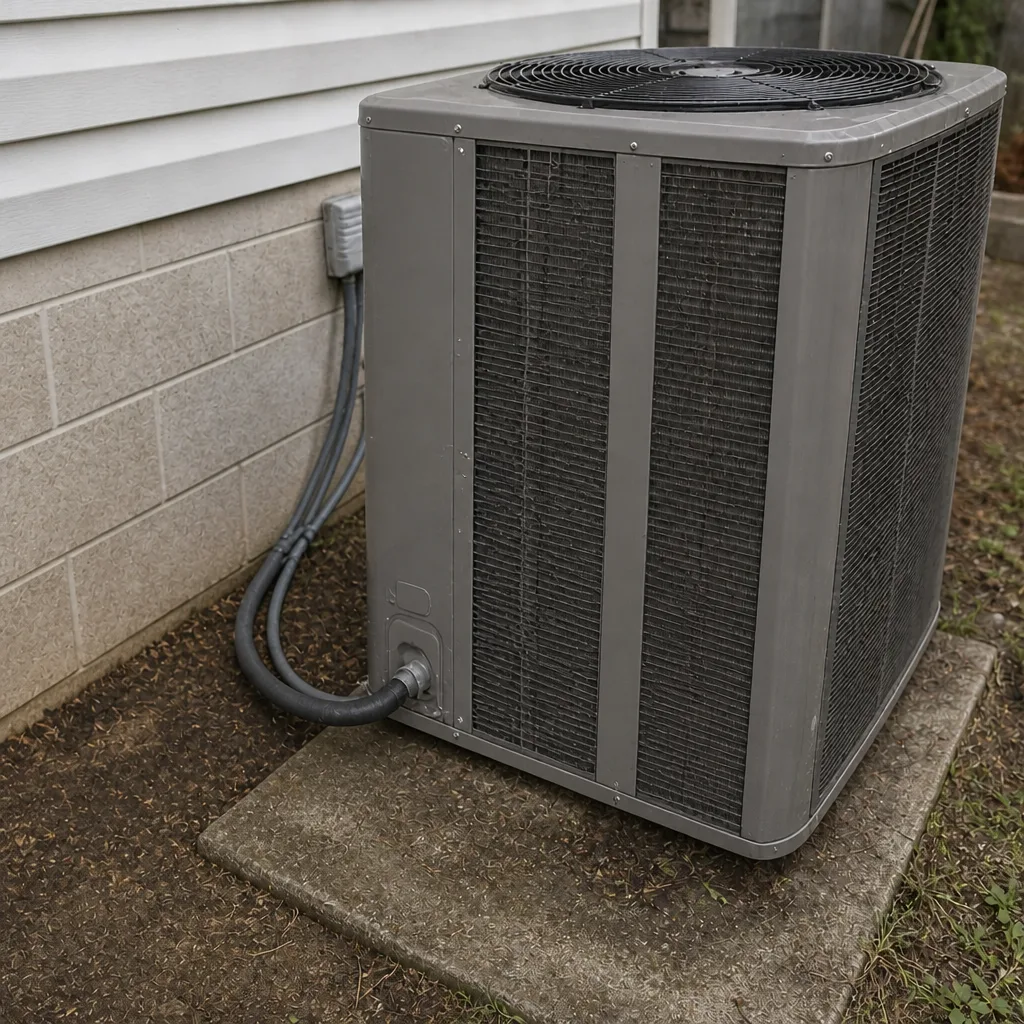
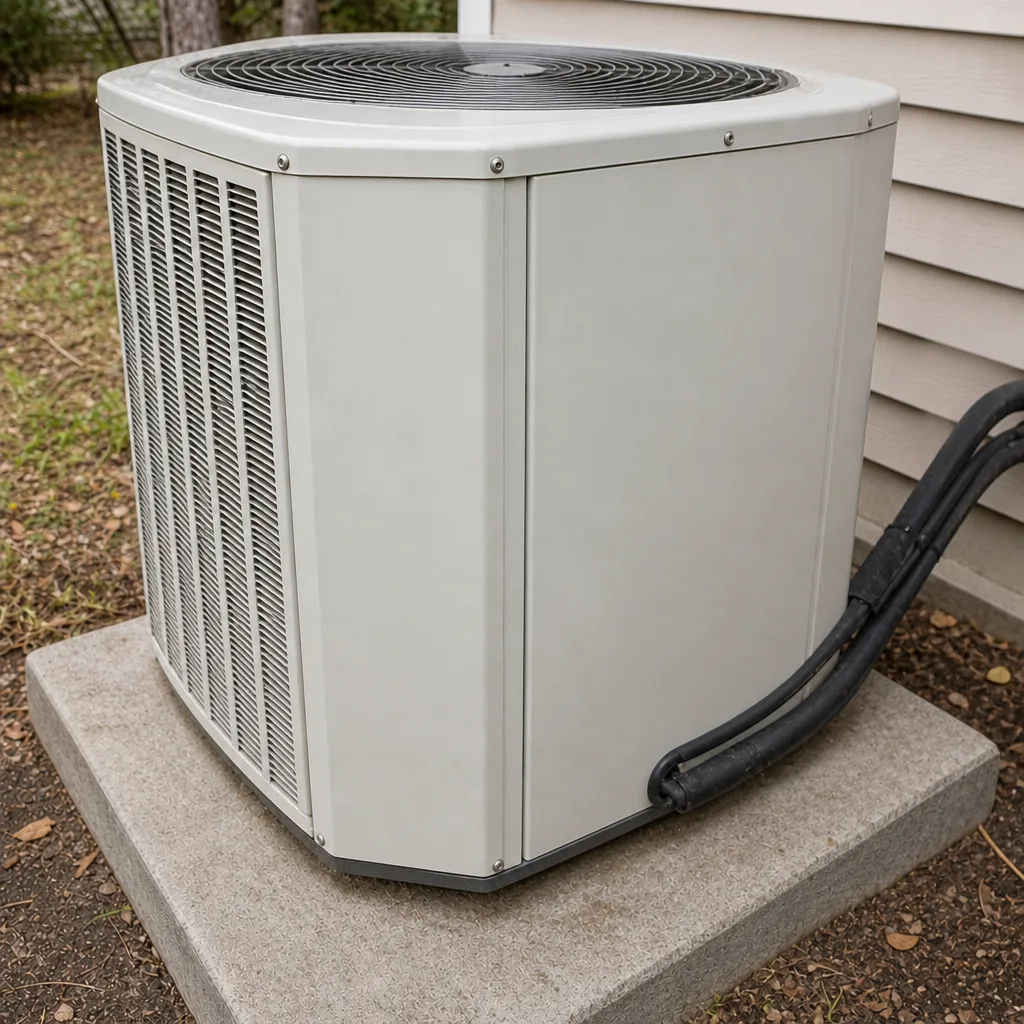
- Condenser coil cleaning. The outdoor coil sheds heat, and when it’s coated with dust, pollen, and lawn debris it can’t. A dirty coil drives up head pressure, makes the compressor work harder, and shortens its life. Cleaning it now is far cheaper than a compressor later.
- Condensate drain flush. Your system pulls pints of water out of the air every day in summer. That water leaves through a drain line and trap. Algae and biofilm build up in that line, and a clogged drain means water backs up into the pan and eventually into your ceiling or floor. Flushing it in February gets ahead of the growth that happens once the system runs constantly.
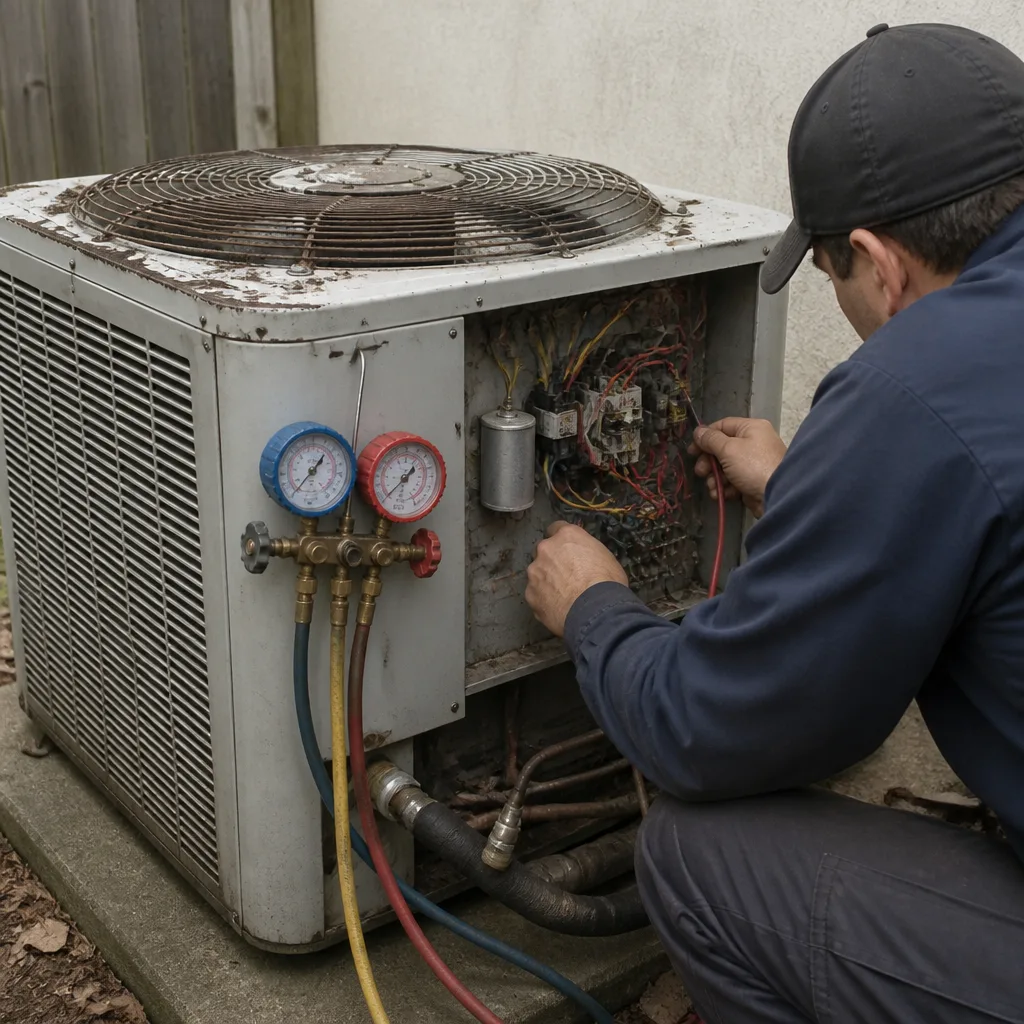
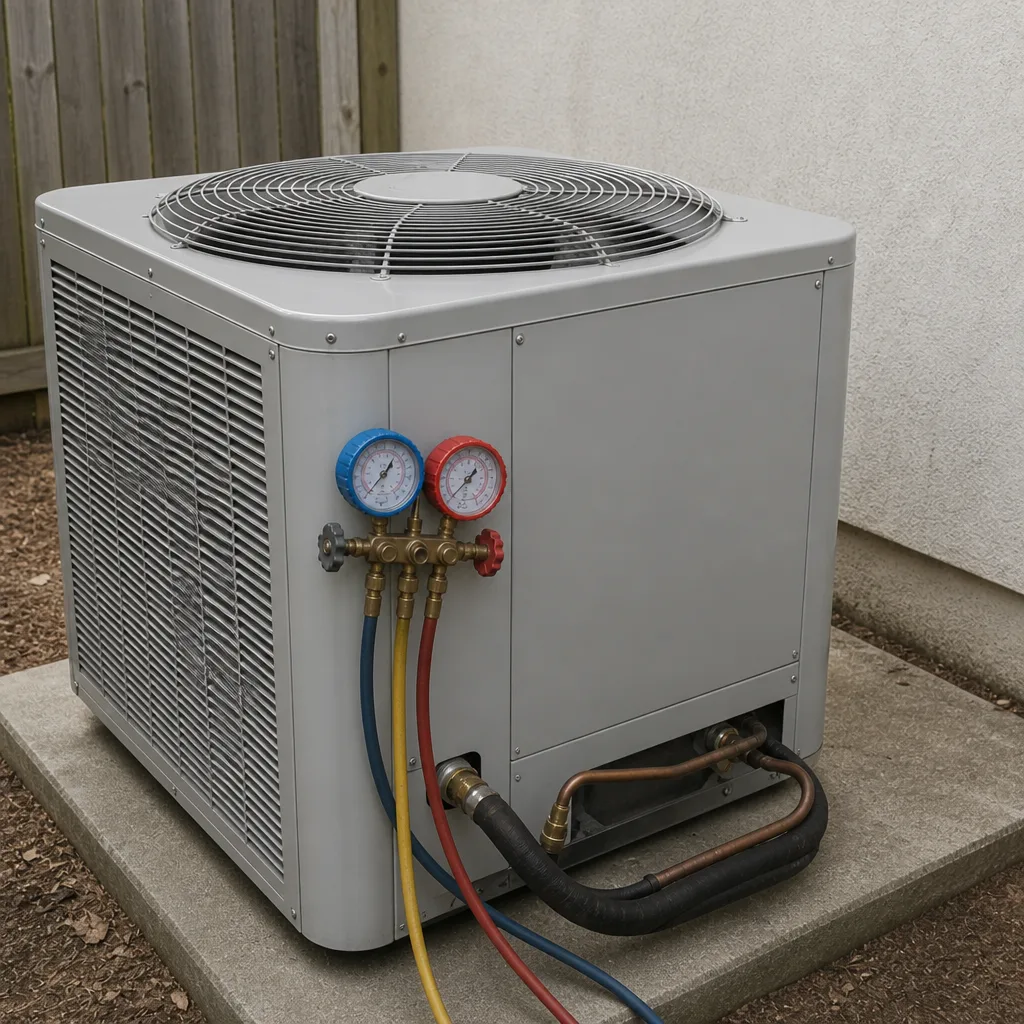
- Refrigerant charge check. Low charge is one of the most common causes of weak cooling and a struggling compressor. A technician measures charge against the system’s spec rather than guessing. If it’s low, there’s a leak to find, not just refrigerant to add.
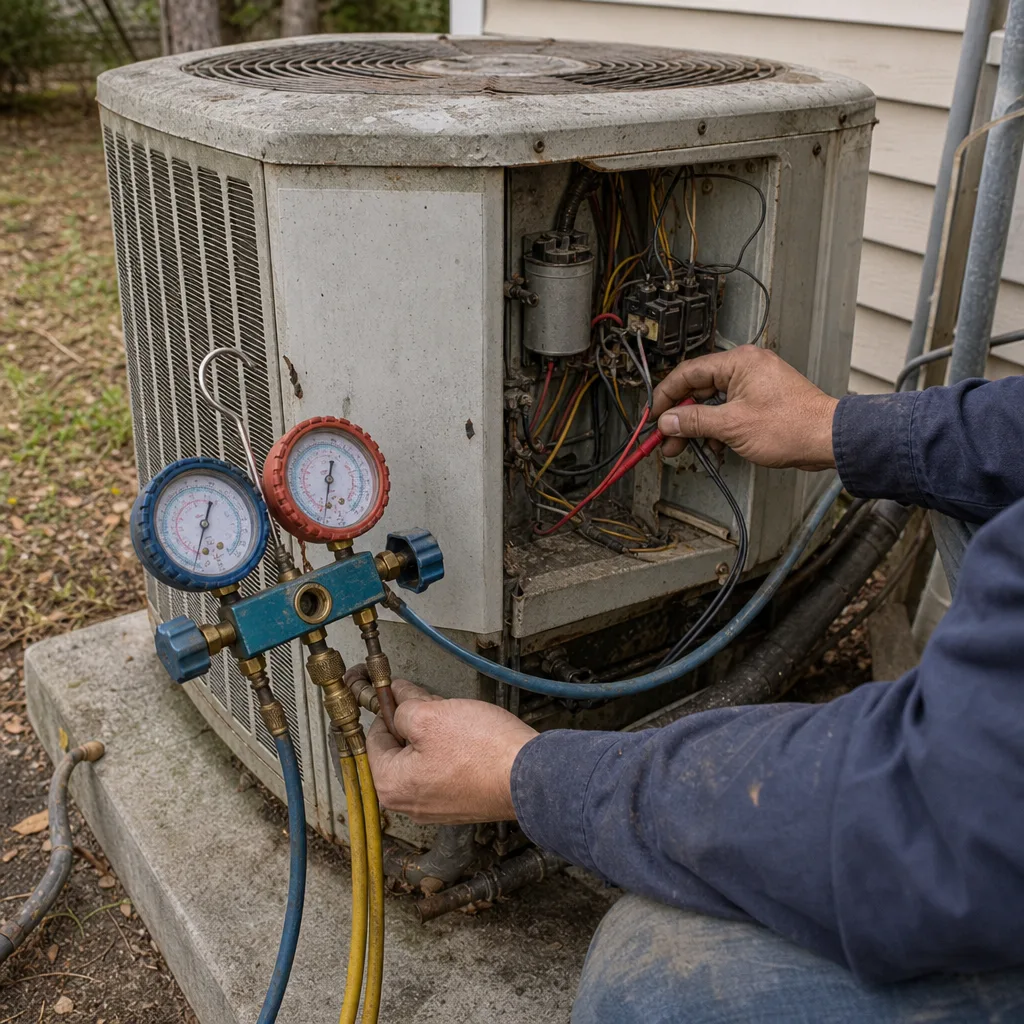
- Capacitor test. Start and run capacitors are cheap parts that fail with age, and a failed capacitor is one of the most frequent reasons an AC won’t start on a hot afternoon. Testing them in the off-season lets you replace a weak one on your schedule instead of on the hottest day of the year.
- Blower and air handler inspection. The indoor blower moves every cubic foot of air your home gets. A dirty blower wheel or a loose belt cuts airflow and cooling efficiency.
- Thermostat and control check. Confirm the thermostat reads accurately and that the system cycles as it should.
That list is the core of pre-season work, and it’s the same whether your system is a Carrier, a Trane, a Bryant, or an American Standard. The equipment brand changes the parts, not the physics.
Why February and March Beat May for Technician Attention
The pattern is predictable every single year. Cooling season arrives, homeowners turn on the AC, something doesn’t feel right, and the phones light up. By May, every HVAC company in the area is running a full board, and the difference between a routine maintenance call and an emergency is often just how long you wait for someone to show up.
Book in February or March and the math changes. Cooling demand is light, so systems are off-peak. Technicians aren’t triaging no-cool calls. A pre-season visit gets unhurried attention, a full checklist, and time to order any parts a repair needs before the heat arrives. You get to fix a weak capacitor or a slow drain on a quiet Tuesday instead of discovering it on the first 95-degree afternoon.
There’s a second advantage that doesn’t get talked about enough: information. When a system is checked in the off-season, you learn what condition it’s actually in. A technician can tell you the compressor is drawing high current, the coil is fouled, or the unit is near the end of its useful range – and you have weeks to plan. That’s the difference between a decision and a panic. Diagnosis first, recommendation second. That’s how it should work, and February is the month that makes it possible.
June Through September: In-Season Monitoring
Once the heavy cooling load sets in, your job shifts from maintenance to observation. You’re not fixing anything during these months – you’re watching for the signals that tell you a call is needed before a small problem becomes a no-cool emergency. Three things are worth tracking, and none of them require tools:
- Supply air temperature. Put a simple thermometer in a supply register and note what it reads on a normal afternoon. A healthy system delivers noticeably cooler air than room temperature. If that gap narrows over a few days, airflow or charge has changed, and it’s time to call.
- Condensate pan level. Check the pan under your indoor unit when you change the filter. It should drain freely and stay mostly dry. Standing water means the drain is starting to clog, and that’s a call now, not later.
- Filter loading rate. Note how dirty the filter gets in a month. If it’s loading faster than usual, something in the house or the system has changed – more dust, more pollen, or reduced airflow. A filter that loads fast is telling you something.
The threshold to call is simple: any of these signals plus a system that runs longer than it used to, or a utility bill that jumps without an obvious reason. Those combinations usually mean a developing problem, and catching it during the cooling season is still cheaper than catching it after a compressor fails. We work on your brand, so there’s no question of whether we’ll service what you own – Carrier, Trane, Lennox, Goodman, Rheem, York, Daikin, Bryant, American Standard, they all get the same diagnostic process.
October and November: Heating Prep for Heat Pumps and Gas Furnaces
Cooling load drops in October and November, and that’s the window to turn attention to the heating side. What that means depends on what you have, and the two systems need different checks.
For heat pumps: the reversing valve is the part that switches the system between cooling and heating, and it’s the component most likely to cause a problem after a long cooling season. A technician should verify it shifts cleanly, check the defrost cycle, and confirm the auxiliary heat comes on when called. A thermostat switchover test confirms the system actually changes modes on command, not just when it feels like it.
For gas furnaces: the burner assembly, ignition system, and heat exchanger should all be inspected before the heating season. A furnace that’s sat idle for months can develop ignition problems, and the heat exchanger is a safety component – a cracked exchanger is a serious concern that needs professional evaluation, not a homeowner check. Gas work is not a DIY job. If you smell gas or suspect a problem with the burner or exchanger, call a qualified technician.
Either way, run a switchover test in October: turn the thermostat to heat, let it run, and confirm warm air comes out of the registers. If it doesn’t, you’ve found the problem weeks before you need the system, instead of on the first cold night.
December and January: The Cold Nights and Heat Strip Function
Spring Hill’s heating load is mild, but it isn’t zero. There are a handful of nights each winter that drop into the low 30s, and those are the nights your heating side gets tested. For most homes here that means a heat pump running with electric heat strips as backup, and the heat strips matter even though they sit unused most of the year.
Heat strips are the auxiliary heat that kicks in when the outdoor temperature drops far enough that the heat pump alone can’t keep up, or when the system goes into defrost. If a heat strip has failed, you won’t know it during mild weather. You’ll know it on the coldest night of the year, when the system runs but the house doesn’t get warm. Testing the auxiliary heat in the fall, before you need it, is the whole point of October and November prep.
For homes on a gas furnace, the cold nights are when a marginal ignition system or a dirty burner shows itself. Same logic: the failure is discovered at the worst possible time unless it’s checked ahead. When a heating system does fail in a cold stretch, that’s a genuine comfort and safety issue, and it’s worth treating as urgent. Fast dispatch from 7am to 7pm covers the calls that come in during the day, and we answer 24/7 if you need to reach us on a cold night.
The Year-Round Task: Monthly Filter Checks
If you do only one thing on this whole list, make it this one. Check your filter every month. Not every three months – every month, at least during the heavy pollen stretch.
Spring Hill’s pollen and dust load is heavier than most generic maintenance guides account for. Spring brings a real pollen season, and a filter that would last three months in a drier climate can load up in one here. A clogged filter is the single most common cause of reduced airflow, and reduced airflow is behind a large share of the cooling problems we see: frozen coils, high head pressure, a system that runs constantly and never quite keeps up.
The check itself takes a minute. Pull the filter, hold it up to the light. If you can’t see light through it, replace it. If you can see light but it’s visibly gray, note the date and check again sooner. Track how fast it loads and you’ll learn your home’s own rhythm – some houses need a new filter every month in spring, others every six weeks. Replace with the size and rating the system was designed for; a filter that’s too restrictive can hurt airflow as much as a dirty one. This single habit is the cheapest insurance your system has.
Common Mistakes to Avoid
- Waiting until May to schedule maintenance. By the time the first hot week hits, every company is buried in emergency calls. Book in February or March and you get real time and a real checklist instead of a rushed visit.
- Skipping the condensate drain because “it’s just water.” A clogged drain line is one of the most common causes of water damage from an HVAC system. Flush it in the off-season and check the pan monthly.
- Assuming the heating side is fine because you never use it. A heat pump’s reversing valve and heat strips sit idle for months and can fail without warning. Test the switchover in October, before the first cold night.
- Running a filter until it’s visibly clogged. By the time it looks bad, airflow has already been restricted for weeks. Check monthly during pollen season and replace on schedule, not on appearance.
- Ignoring a rising utility bill. A bill that climbs without an obvious reason is often the first sign of a dirty coil, a failing capacitor, or low refrigerant. Treat it as a diagnostic signal.
- Trying to diagnose refrigerant or electrical problems yourself. Refrigerant handling and capacitor replacement involve serious hazards. Leave them to a trained technician – the cost of a service call is far less than the cost of an injury.
- Choosing a contractor by brand loyalty alone. A single-brand dealer will steer you toward their line. A brand-neutral contractor recommends based on your home’s layout, budget, and efficiency needs – which is the only recommendation that matters.
When to Call a Professional
Some problems are maintenance; some are calls. Call a professional when your system stops cooling entirely, when you smell gas near a furnace, when the condensate pan is overflowing, when the outdoor unit makes grinding or clicking noises, or when the system runs constantly and never reaches the set temperature. Call if the breaker trips repeatedly, if ice forms on the indoor coil, or if a heat pump won’t switch to heat. Any of those is beyond a homeowner check. For routine pre-season work, book the February-to-March window. For urgent problems during the cooling season, same-day service is available. Ironside AC Repair offers free estimates in Spring Hill – call (833) 946-7618. We answer 24/7. Fast dispatch from 7am to 7pm, Sunday through Friday.
Frequently Asked Questions
February and March are the best months. Cooling demand is still low, technicians have open schedule slots, and you get weeks to address any findings before the heat load arrives. May is the worst month for availability because every homeowner calls at once.
Check it monthly during the spring pollen season and every six to eight weeks the rest of the year. Local pollen and dust load heavier than in most climates, so a filter that would last three months elsewhere can load up in one here. Replace when you can’t see light through it.
Yes. The reversing valve, defrost cycle, and heat strips get little use and can fail silently. A switchover test in October confirms the system will heat when you need it, instead of discovering a failure on the coldest night of the year.
A healthy system delivers supply air noticeably cooler than room temperature, typically a 15 to 20 degree drop. Track it with a simple thermometer in a register. If the gap narrows over several days, call for a diagnostic.
Light debris on the outdoor coil can be rinsed off, and you can check the indoor pan for standing water. Refrigerant and electrical work – capacitors, charge, wiring – involve serious hazards and should be left to a trained technician. Call (833) 946-7618 if you’re not sure whether the system is running right – estimates are free.
Yes. We install, repair, and replace AC and furnace systems, so you don’t need a second contractor for the other half of your HVAC system. We work on Carrier, Trane, Lennox, Goodman, Rheem, York, Daikin, Bryant, and American Standard equipment.
October or November, before the heating season starts. For furnace repair and inspection, the fall window gives you time to address ignition problems, burner issues, or heat exchanger concerns before the first cold night. Call (833) 946-7618 for a free estimate.
A thorough pre-season visit covers coil cleaning, drain flush, refrigerant check, capacitor test, blower inspection, and thermostat verification. Most take about an hour, though older systems or heavy debris can take longer. Book early in the season for the most flexible scheduling.
Call (833) 946-7618. We answer 24/7. We’re closed on Saturdays, but a call on a Saturday is booked into the next opening, Sunday through Friday, 7am to 7pm. Get the call in and we’ll schedule you in.
The Bottom Line
Spring Hill’s HVAC calendar is a cooling season and a heating season separated by two short transition windows. The most valuable window is February through March, when a pre-season visit gets real technician time and catches small problems before they become summer emergencies. Monitor supply air temperature, condensate pan level, and filter loading through the summer. Prep the heating side in October and November, including the reversing valve and heat strips on heat pumps. Check the filter monthly, especially during pollen season. Do those things and you’ll spend less on repairs and avoid the worst-timed breakdowns. For AC installation or a system you’re considering replacing, a brand-neutral recommendation based on your home is worth more than a single-brand sales pitch. If you’re in Spring Hill and want a straight assessment of where your system stands, call (833) 946-7618 for a free estimate. We answer 24/7. Fast dispatch from 7am to 7pm, Sunday through Friday.
Written by the team at Ironside AC Repair.
See the difference
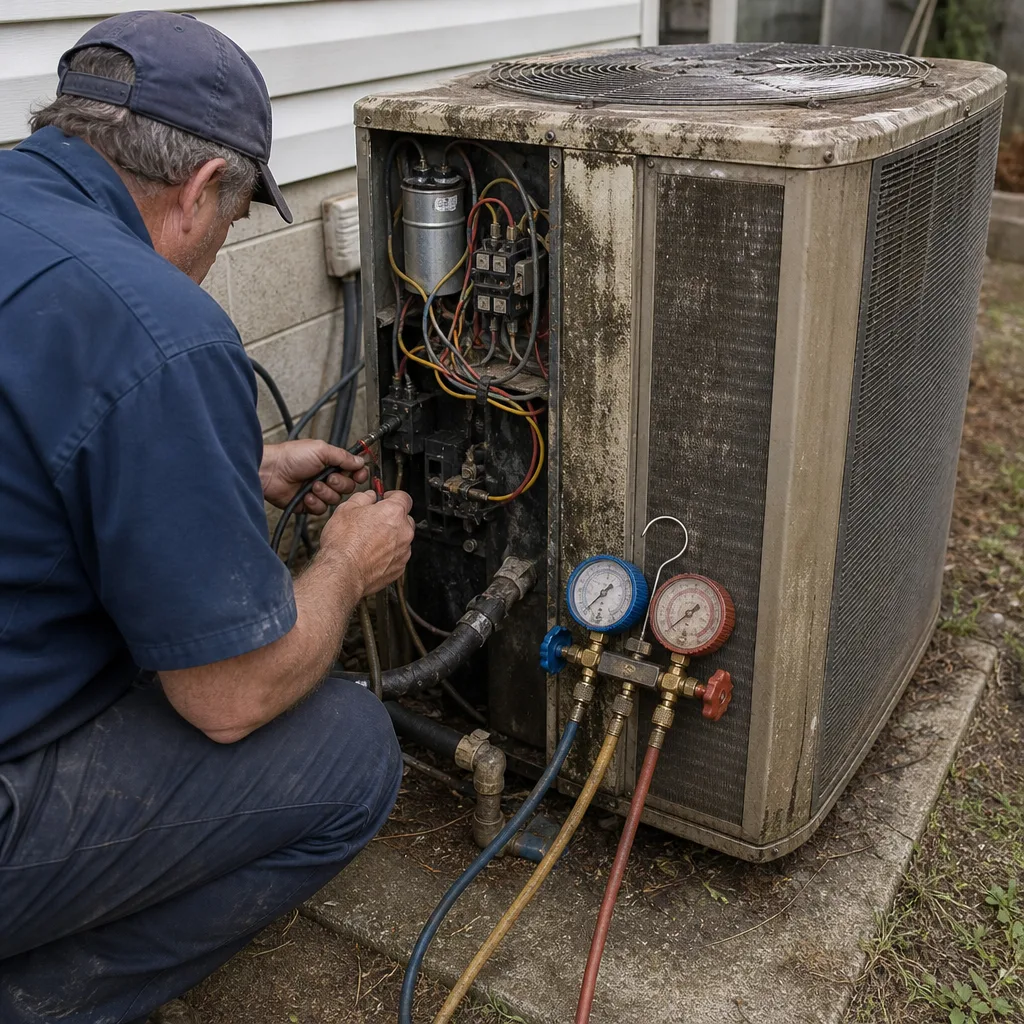 Before
 After
 Before
 After
 Before
 After