
Last updated November 15, 2026
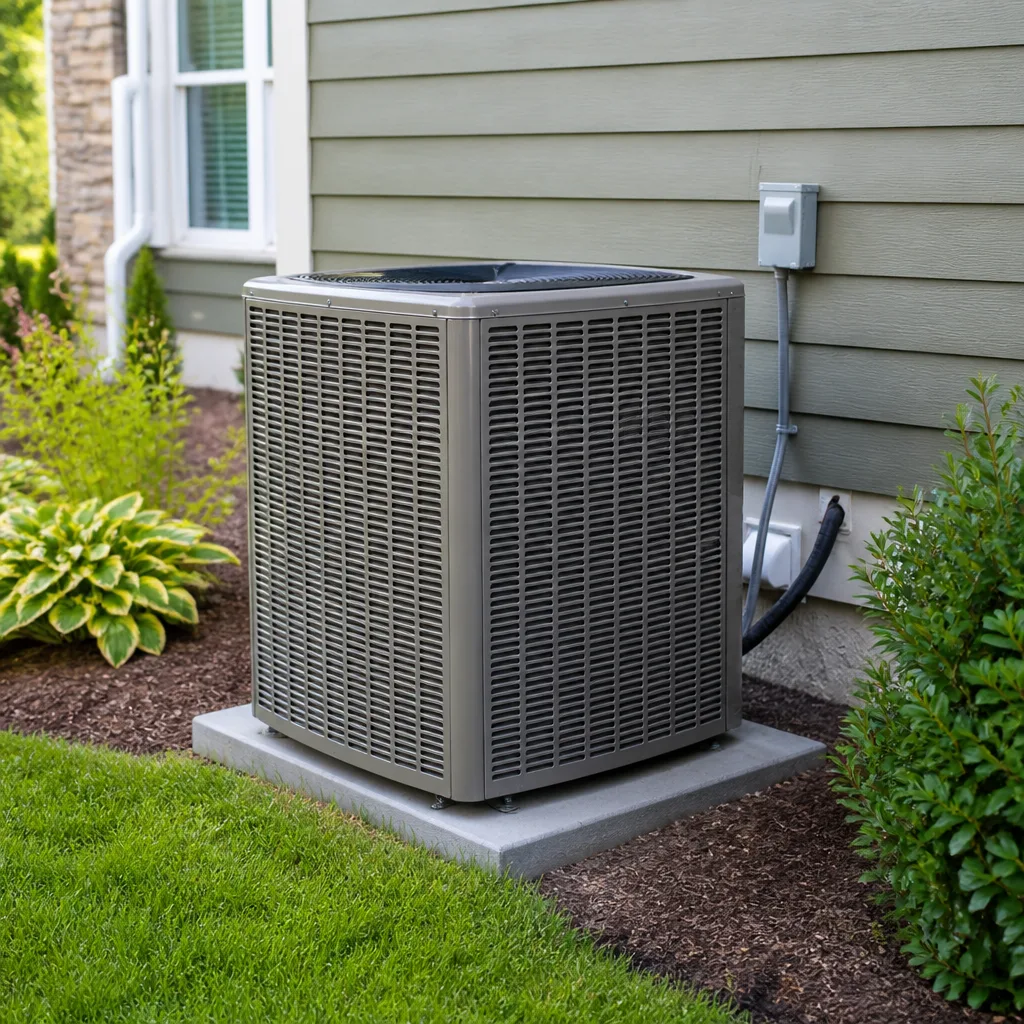 AC repair
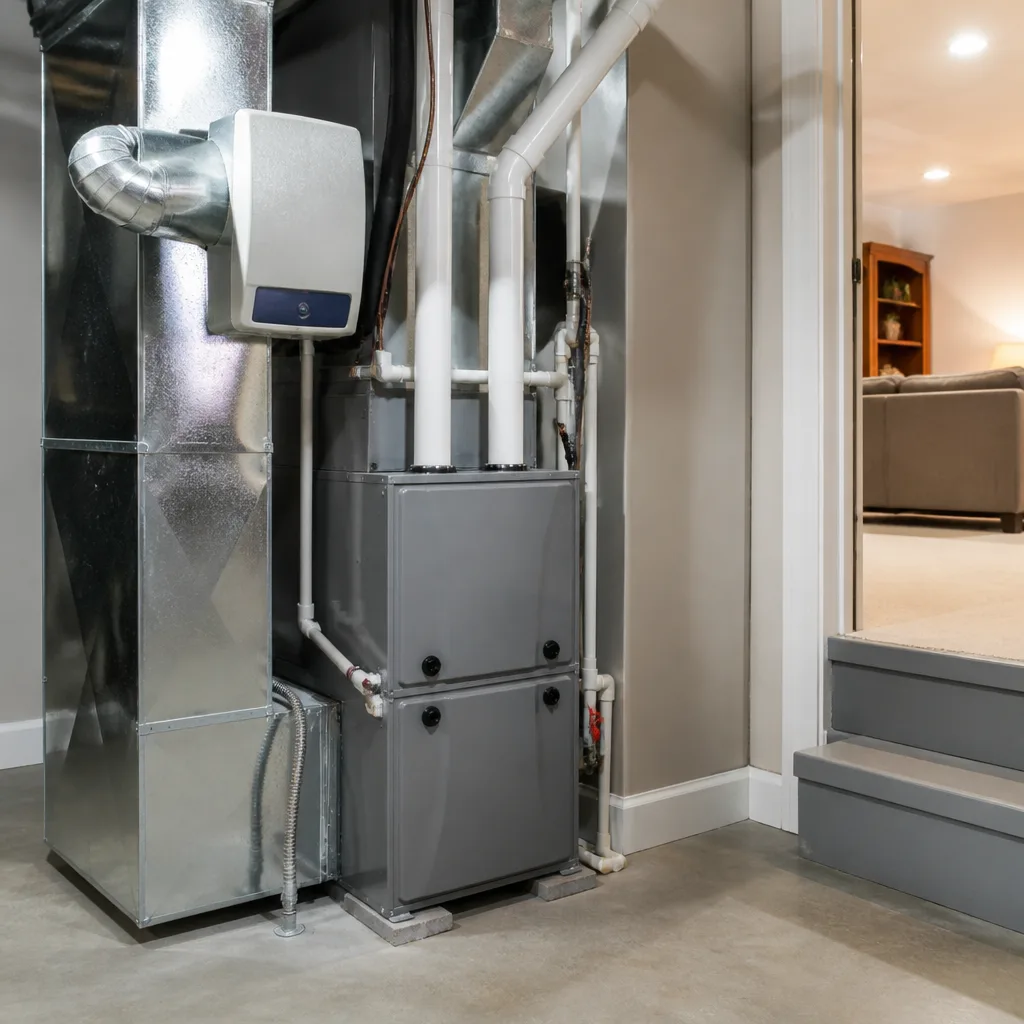 Furnace & heating
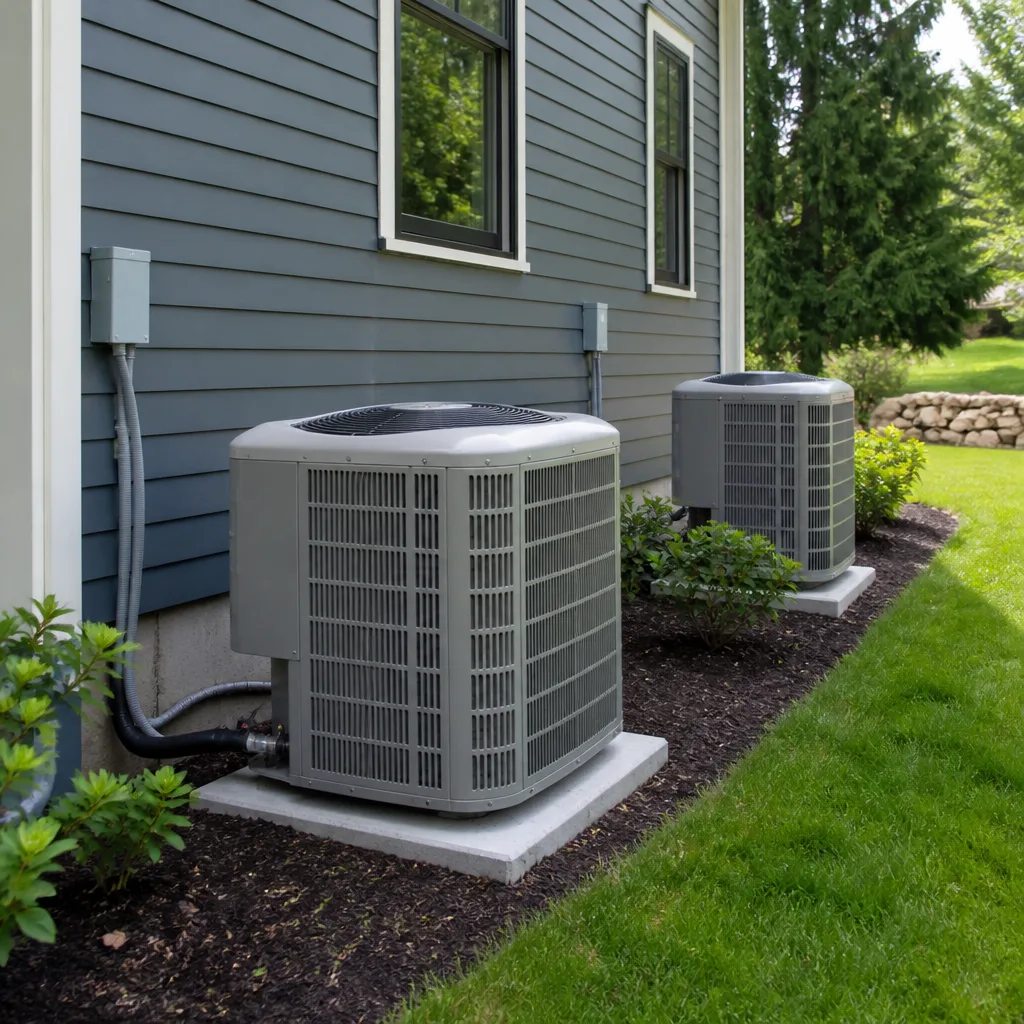 Heat pumps
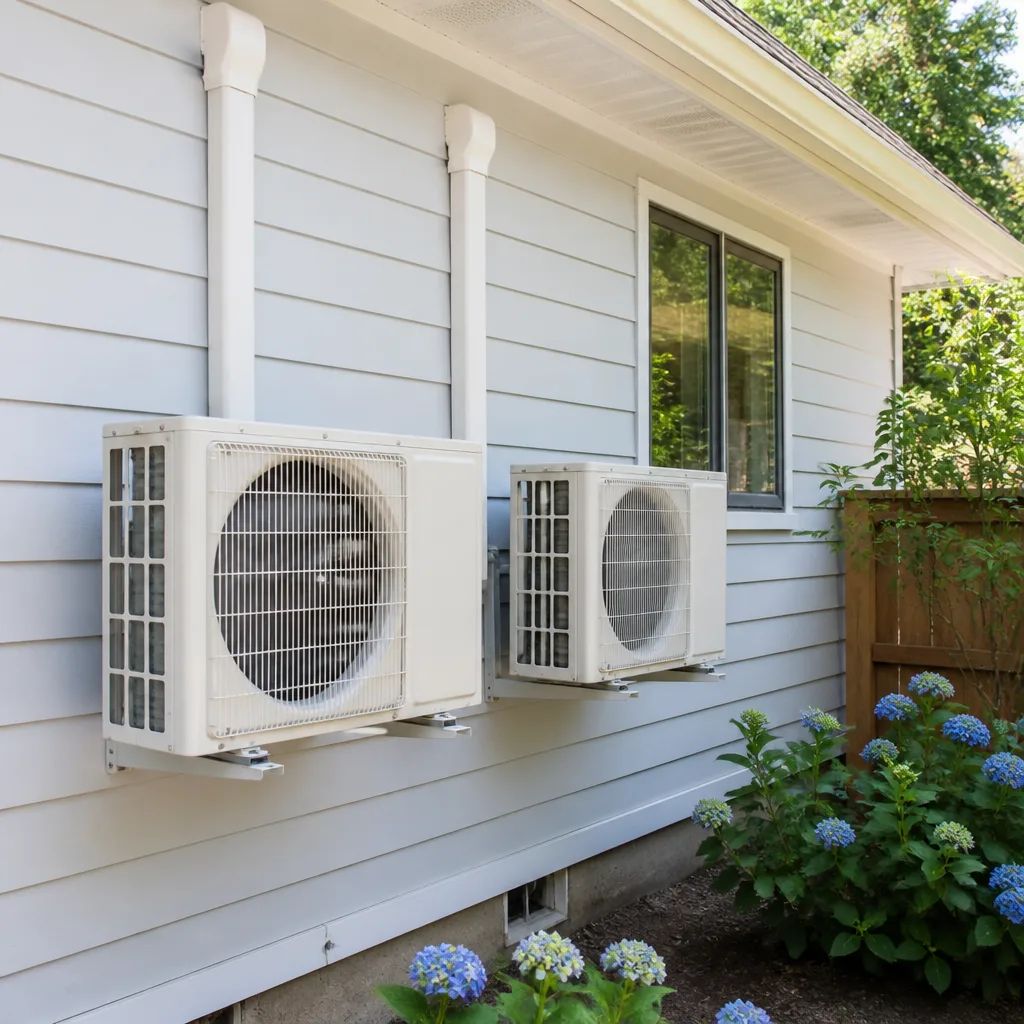 Ductless mini splits
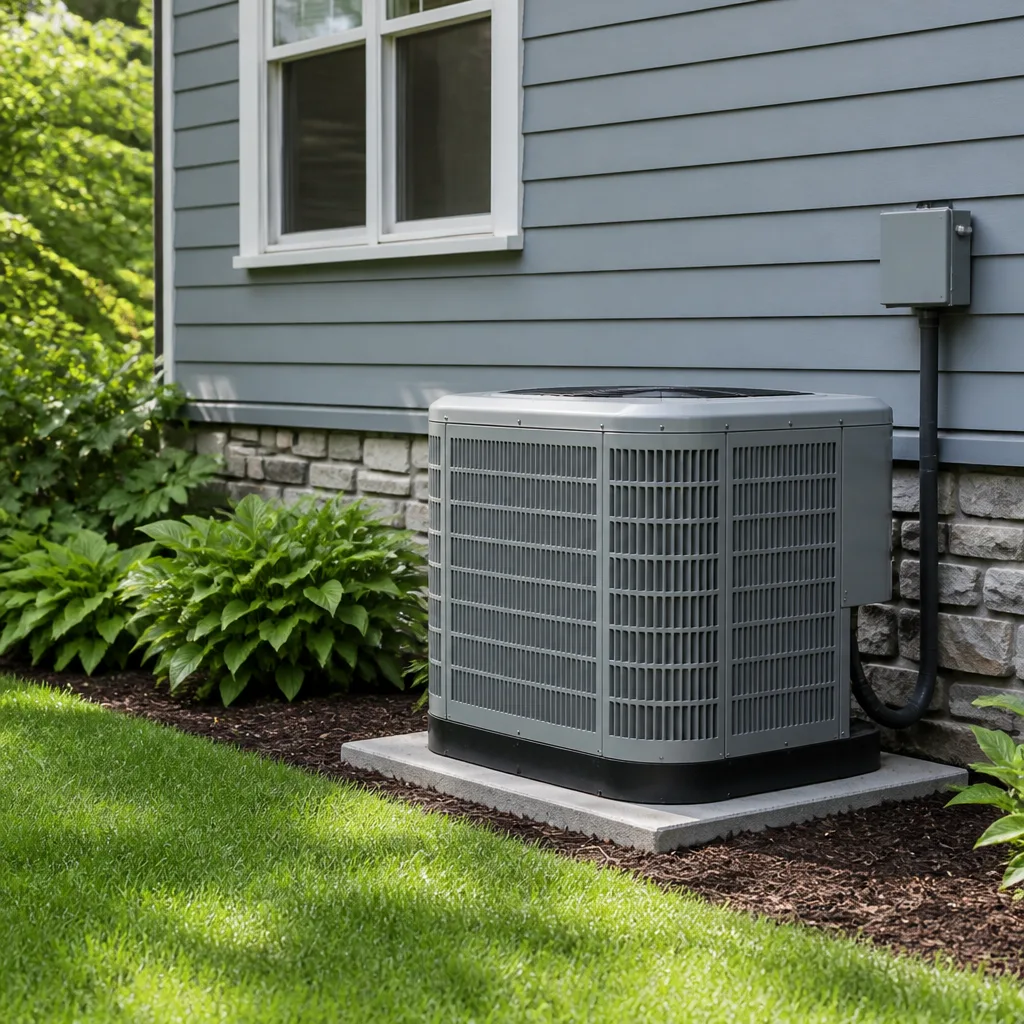 Carrier
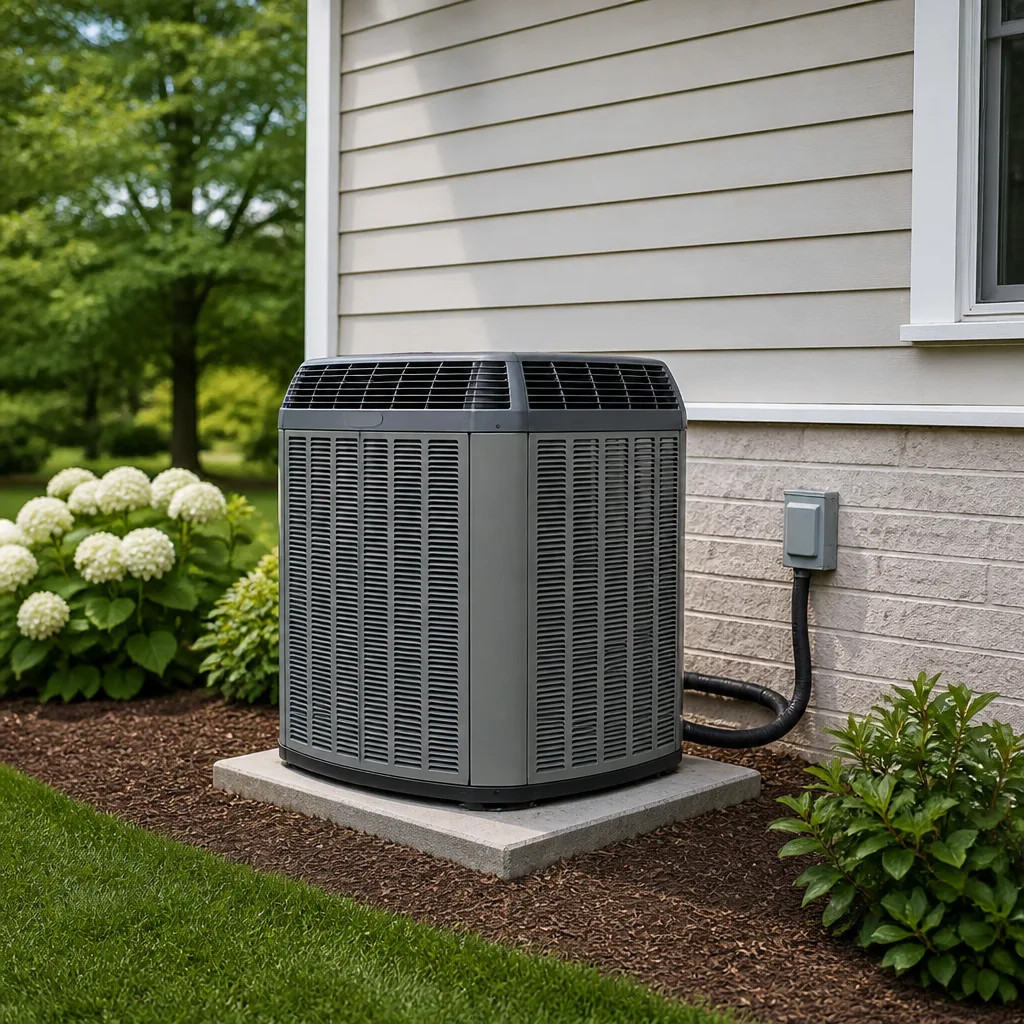 Trane
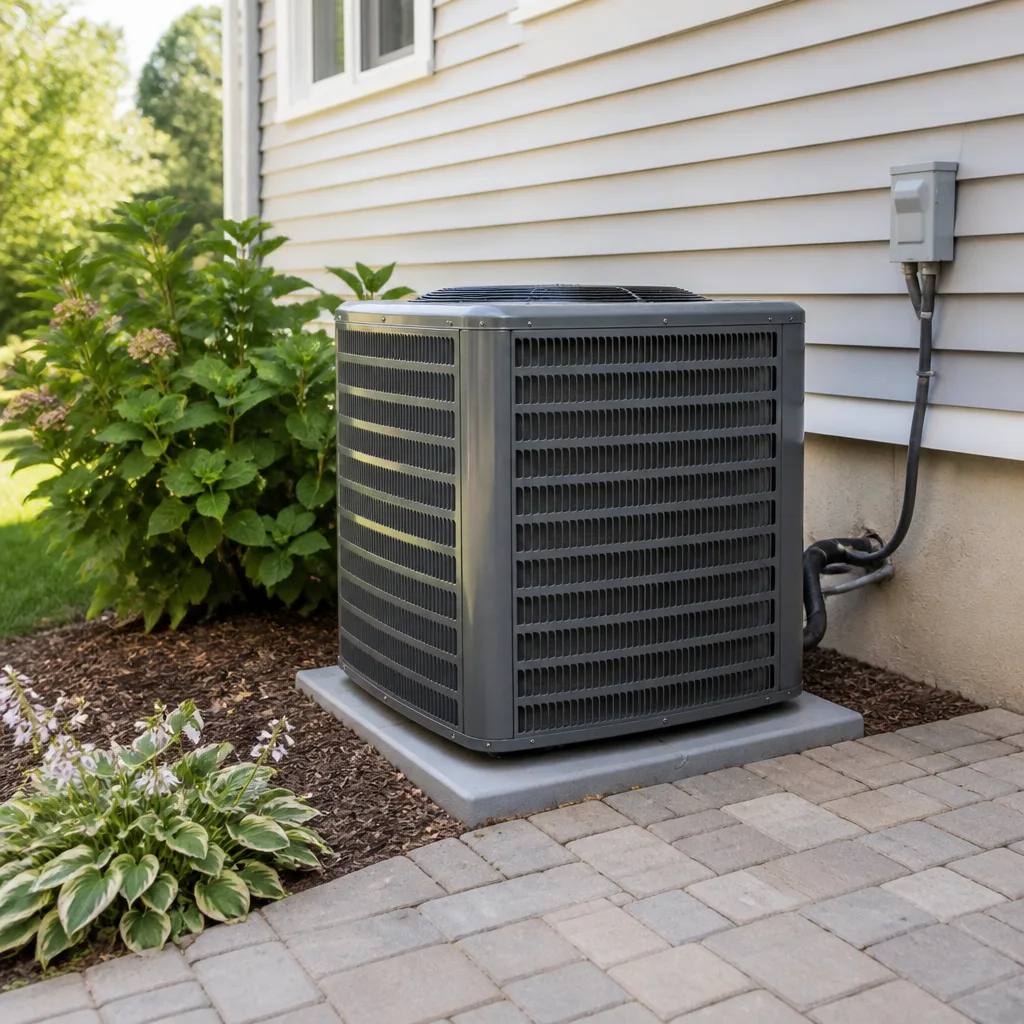 Goodman
Seasonal tune-up and full diagnostic on your Carrier, Trane, or Goodman system - readings shown to you before any repair is proposed
Diagnosis first, numbers second - you approve the repair price before a single part goes in.
Get your free estimateHow to Hire an HVAC Contractor in Spring Hill: A Step-by-Step Guide
Florida requires air conditioning contractors to hold a state-issued license, and that license number takes about thirty seconds to check on the state’s public database. Most homeowners in Spring Hill never do it. They get a quote, like the number, and write a deposit check to whoever answered the phone fastest. That single skipped step is where the trouble starts. Spring Hill’s market runs from established licensed shops to seasonal operators who appear when the weather turns brutal and vanish when it cools off. This guide gives you a screening sequence you can run in an afternoon, in order, before anyone touches your system or your money.
Quick Answer
To hire an HVAC contractor in Spring Hill, verify the contractor’s Florida CAC or CFC license number on the DBPR website first, confirm the status reads active (not delinquent), then ask about permits, a Manual J load calculation, and whether installers are employees or subcontractors before you accept any quote. A legitimate quote will be a written document with itemized labor, equipment model numbers, warranty terms, and permit inclusion – not a one-line price. Compare brand-agnostic shops against single-brand dealers, because brand alignment shapes the equipment recommendation you get.
Styles & brands we work with
- AC repair
- Furnace & heating
- Heat pumps
- Ductless mini splits
- Carrier
- Trane
- Goodman
Table of Contents
- Step 1: Verify the License Before Anything Else
- Step 2: Ask Four Questions Before a Quote Is Given
- Step 3: Understand Brand-Agnostic vs. Dealer
- Step 4: Read the Quote Document Properly
- Step 5: Demand a Manual J Load Calculation
- Step 6: Know Who Shows Up on Install Day
- Step 7: Score the Answer to “What Brand Do You Recommend?”
- Common Mistakes to Avoid
Step 1: Verify the License Before Anything Else
Florida law requires HVAC contractors to hold a state-issued license – either a Certified Air Conditioning (CAC) license or a Certified Mechanical Contractor (CMC/CFC-class) credential – and that license number is publicly verifiable in under two minutes at DBPR.MyFloridaLicense.com. Every legitimate contractor will hand you the number without hesitation. If someone dodges the question or says “we’re licensed, don’t worry about it,” stop there.
Here’s how to run the check:
- Ask the contractor for their Florida license number in writing – on the quote, in an email, anywhere it can be read back.
- Go to DBPR.MyFloridaLicense.com and enter the number in the “Verify a Licensee” search.
- Confirm three things: the license type (CAC or CFC), the name on the license matches the company you’re hiring, and the status reads Active.
- Read the expiration date. A license that lapses mid-project is a red flag.
Status matters more than people realize. Active means the contractor is in good standing with the state and currently cleared to work. Delinquent typically signals unpaid renewal fees or a lapse in required insurance – not necessarily a bad contractor, but not a contractor you should hand a deposit to before it’s resolved. Null and void means the license has no legal force at all. When you hire through Ironside AC Repair, the license comes up in the same search – our technicians have up to experience, and the paperwork is there for you to check.
This is the single highest-value move in this guide. It costs nothing and filters out most of the risk in one shot.
Step 2: Ask Four Questions Before a Quote Is Given
Most homeowners ask “how much?” first. Reverse that. Four screening questions, asked before a price is ever mentioned, tell you more about a contractor than the quote does.
1. Will you pull a permit for this work? HVAC replacement and most significant repair in Florida requires a permit, and a contractor who offers to skip it is saving their own paperwork at your expense. Unpermitted work can complicate resale, insurance, and inspection down the road.
2. Will you perform a Manual J load calculation? Manual J is the industry-standard method for sizing equipment to a specific home – square footage, window placement, insulation, ceiling height, and orientation all factor in. An accurate load calc prevents the oversizing that leads to short cycling, uneven cooling, and premature failure. A contractor who sizes by “rule of thumb” (a certain tonnage per square foot) is guessing.
3. Who performs the actual installation – your employees or subcontractors? Some companies sell the job and hand it off. That’s not automatically wrong, but you deserve to know. Ask specifically who will be on-site and whether they’re on the contractor’s payroll.
4. What does your warranty cover, and for how long? Manufacturer warranties and labor warranties are two different things. Get both in writing.
Contractors who answer all four cleanly, without hedging, are telling you something. So are the ones who don’t. A straight-shooting shop expects these questions and has ready answers. In a Spring Hill market that mixes long-established licensed shops with seasonal operators, that reaction alone narrows the field fast.
Step 3: Understand Brand-Agnostic vs. Dealer
A manufacturer-authorized dealer sells and services one brand line, often exclusively. That’s a legitimate business model, but it means the dealer’s recommendation is constrained by what they carry. If the dealer stocks Carrier, the answer to “what should I install?” will nearly always be Carrier – not because Carrier is wrong for your house, but because the dealer’s inventory, training, and margin all point that direction.
A brand-agnostic shop works across multiple manufacturers. When we recommend equipment, the logic runs on your home first: square footage, duct condition, humidity load, budget, and efficiency goals. The brand follows from that, not the other way around. That’s why we install and service equipment from nine major brands – Carrier, Trane, Lennox, Goodman, Rheem, York, Daikin, Bryant, and American Standard. York and Daikin have strong value positioning; Bryant and American Standard sit under the same corporate umbrellas as Carrier and Trane respectively. A brand-agnostic shop can present those trade-offs honestly, because there’s no single product line to protect.
The practical test for the homeowner is simple. When a dealer recommends a system, ask: “Would you recommend this same system if you carried three other brands?” A confident yes with a reason is fine. A defensive answer tells you where the recommendation came from.
Brand-agnostic doesn’t mean anti-brand. It means the equipment conversation starts with the house. On the heating side, that matters just as much – a furnace that’s the right fit for one home’s layout and ducting may be wrong for the one next door. Heat and cool, handled by one contractor, with no separate relationship to build for the other half of the year.
Step 4: Read the Quote Document Properly
A legitimate HVAC quote is a document, not a number. Here’s what should appear on it before you sign anything:
- Itemized labor and materials – what’s being done and what it costs, broken out.
- Equipment model numbers – not just “3-ton unit,” but the exact model and serial-level specification.
- Warranty terms in writing – manufacturer warranty length, labor warranty length, and what voids each.
- Permit inclusion – stated explicitly whether the permit is pulled and by whom, and whether the fee is included in the total.
- Scope of the work – what’s being removed, what’s being installed, and whether any duct or electrical work is included or excluded.
- The company’s license number – printed on the document.
- Payment terms – deposit amount, balance due timing, and payment method.
A one-line number written on a business card or sent in a text message is not a quote. It’s a starting point for a dispute. If the contractor can’t produce a written document with those elements, you’ve learned something before you’ve paid anything.
The written estimate sets the final price. Ask directly whether the number on the page is the whole price or whether additional charges could surface later, and get that answer in writing too.
Step 5: Demand a Manual J Load Calculation
Manual J is the load calculation method published by the Air Conditioning Contractors of America, and it’s the difference between a system sized for your house and a system sized for someone’s guess. Oversized systems cycle too briefly to remove humidity properly – a real problem in Spring Hill, where summer air runs humid – and short cycling wears out compressors faster.
What a proper load calculation considers:
- Conditioned square footage and ceiling height
- Window count, size, and orientation (west-facing glass loads a house differently than north-facing)
- Insulation levels in walls, attic, and floor
- Duct location and condition
- Number of occupants
- Local outdoor design temperatures for your area
When a contractor hands you a quote for new equipment, ask where the tonnage came from. If the answer is “based on your square footage,” ask follow-up: did they run a Manual J, or estimate by rule of thumb? You want the calculation, and you want it in hand. It also protects you on efficiency claims – an oversized high-SEER system won’t deliver its rated efficiency because it never runs long enough to get there.
Sizing correctly on the front end is far cheaper than correcting an oversized installation later. This is diagnosis first, recommendation second. Any contractor who skips the diagnosis and jumps to a tonnage is skipping the part that protects you.
Step 6: Know Who Shows Up on Install Day
The salesperson and the installer are often two different people, and sometimes three or four different companies. Before you commit, get a clean answer to: “Who will physically perform the install?”
Options you’ll encounter:
- In-house technicians – employees of the company you hired. Most accountability, clearest chain of responsibility if something goes wrong.
- Subcontracted crews – legitimate in some markets, but the warranty relationship can blur if the sub does substandard work. Ask whether the company stands behind the sub’s work directly.
- A rotating pool of installers – the sales operation sells the job, then dispatches whoever’s available. Avoid if you can, because craftsmanship and follow-through depend on who you get.
On install day, you should expect the crew to protect flooring, seal the system, evacuate the lines properly before charging, verify refrigerant charge by weight or by superheat/subcool measurement, and walk you through the thermostat before leaving. If a crew rushes through and leaves without a walkthrough, that’s worth flagging on the invoice.
On the cooling side, AC installation done to standard is what protects the equipment warranty and the efficiency numbers on the label. On the heating side, if you’re repairing an aging furnace, furnace repair should be assessed with the same rigor – not with a knee-jerk push to replace before the actual failure point is diagnosed.
Step 7: Score the Answer to “What Brand Do You Recommend?”
This is the single question that separates a brand-agnostic shop from a dealer without you having to ask either of them directly. The answer tells you everything about how the recommendation was built.
What a brand-agnostic shop says: A conditional answer. “It depends on your home’s square footage, your duct setup, and your budget. If you want premium efficiency and quiet operation, here are the options from these three brands. If you want the best dollar-per-ton value, here’s what Goodman or Rheem gets you. If you want the most serviceable design for a Spring Hill home with a tight mechanical closet, here’s what fits.” The recommendation depends on your house – and the shop is willing to name multiple brands, including competitors.
What a single-brand dealer says: One brand. Consistently. Regardless of the house, the layout, or the budget. That answer isn’t dishonest, but it’s constrained.
A few follow-up questions worth asking:
- “Why this brand specifically for my home?” – you want a reason tied to your layout, ductwork, or humidity load, not to the dealer’s inventory.
- “What would you recommend if I said my budget is 20% lower?” – a good shop has answers at multiple price points.
- “What brands do you work on for repairs?” – if the answer is a single brand, you know who’ll be pushing one line on the install side too.
The wider a contractor’s brand range, the more likely you’ll get a system that fits your house instead of one that fits their inventory. That’s the logic behind our recommending across the major makes, because the right system for your home shouldn’t depend on which manufacturer pays the highest dealer margin.
Common Mistakes to Avoid
- Skipping the license check. It takes seconds and filters out most of the risk in this market. Do it before any other step.
- Hiring by price alone. A quote that’s dramatically lower than the others usually means something got left out – a permit, a load calculation, a proper evacuation, or warranty coverage. Ask what’s missing.
- Accepting a rule-of-thumb tonnage. “X tons per square foot” is a shortcut that oversizes homes and leads to humidity problems and short cycling. Insist on Manual J.
- Signing a one-line quote. No itemization, no model numbers, no warranty terms, no permit line, no signature from a licensed company – don’t sign it.
- Assuming a manufacturer-authorized dealer is the safer choice. It’s not automatically better or worse. What matters is whether the recommendation is tied to your house or to the dealer’s product line.
- Paying a large deposit before the paperwork is complete. Deposit terms should be in the written quote. A deposit written before the quote exists in written form is a warning sign.
- Not asking who shows up on install day. Whether the installers are employees or subcontractors changes who’s accountable when something goes wrong in the first year.
One quiet trap worth calling out separately: the seasonal operator who has a license but is running installs only in the warm months. Ask how you’d reach the company in the off-season. A stable contractor has an answer that doesn’t disappear when the weather changes.
See the difference
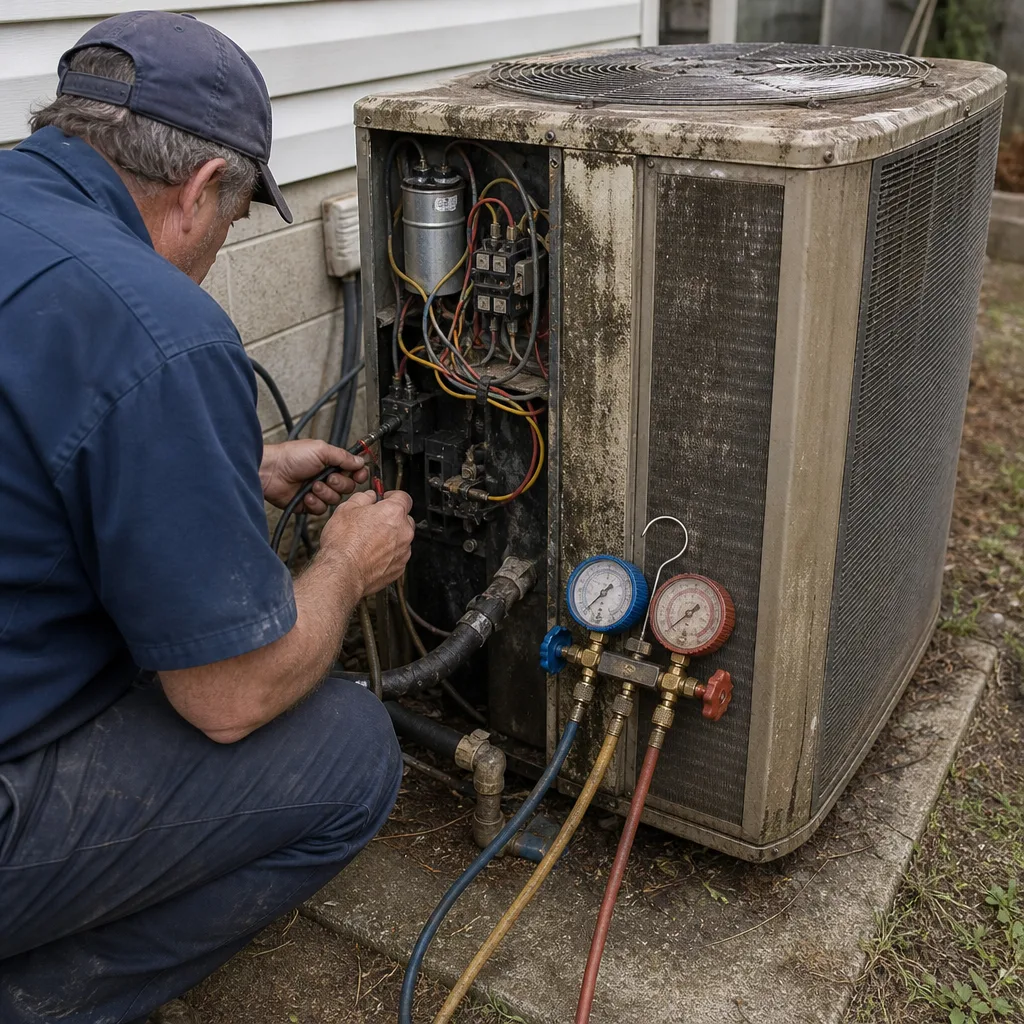 Before
 After
 Before
 After
 Before
 After
When to Call a Professional
Some HVAC work is homeowner-appropriate and some isn’t. The line is generally drawn at electrical service, refrigerant handling, gas lines, and anything to do with a heat exchanger. Specific situations that point to a trained professional:
- Refrigerant leaks – refrigerant handling requires EPA certification and equipment most homeowners don’t have.
- Any gas smell or furnace ignition issue – turn the unit off and call.
- Breakers tripping on the AC or furnace circuit – that’s an electrical fault, not a homeowner fix.
- A system that cools weakly on one side of the house or runs constantly without reaching setpoint.
- Age-related failures where you’re weighing repair against replacement – the diagnostic needs to be honest about which side of that line you’re on.
Getting on a contractor’s calendar before the system fails entirely is one of the small efficiencies of homeownership in Spring Hill, because a mild emergency beats a mid-summer failure every time. Ironside AC Repair offers free estimates in Spring Hill – call (833) 946-7618. We answer 24/7, with fast dispatch from 7am to 7pm, Sunday through Friday.
Frequently Asked Questions
Ask the contractor for their Florida CAC or CFC license number, then look it up at DBPR.MyFloridaLicense.com. Confirm the status reads Active, the name on the license matches the company, and the expiration date is current. A delinquent or null-and-void status is a stop sign. Call (833) 946-7618 if you’d like us to walk you through the search – estimates are free.
Neither is universally better. What matters is whether the recommendation is built on your home or the shop’s inventory. A brand-agnostic shop works across multiple manufacturers and can recommend across the trade-offs, while a dealer’s recommendation is constrained by the one line they carry. Ask the dealer to justify the recommendation against your house specifically – if it holds up, it holds up; if it can’t, that’s your answer. We service nine major brands including York, Daikin, Bryant, and American Standard, and the recommendation follows the home.
Manual J sizes equipment to your specific home – square footage, windows, insulation, ceiling height, and duct setup – rather than to a rule of thumb. Oversized systems short cycle, struggle to remove humidity in the warm-season air, and wear out faster. If a contractor can’t tell you how the tonnage was calculated, that’s worth pushing on before you sign. We run the calculation as part of any replacement recommendation.
Replacement and significant repair work generally require a permit. A contractor who offers to skip the permit is saving their own paperwork at your expense – unpermitted work can complicate insurance and resale. Ask directly, and confirm the permit line appears on the written quote. If it doesn’t, ask why. Call (833) 946-7618 for a free estimate.
Ask this before the quote, not after. Some companies use their own technicians; others subcontract the install. Either can be fine, but you should know who’s on-site and who’s accountable for warranty work later. The answer also tells you something about how the company stands behind its work. We’re happy to answer this question up front, along with any others on this list.
Same-day repair is often possible, especially when the call comes in early enough for fast dispatch from 7am to 7pm. We answer 24/7, and a call outside dispatch hours gets booked into the next opening, Sunday through Friday. If your system is down in the heat, call (833) 946-7618 and we’ll give you a real timeline.
The Bottom Line
Hiring an HVAC contractor in Spring Hill comes down to running a screening sequence instead of shopping on price. Verify the Florida license first, ask the four pre-quote questions second, then sit with the answer to “what brand do you recommend and why?” before you talk about money. When the quote arrives, hold it to the standard of a written document with model numbers, warranty terms, permit line, and a license number printed on it. A contractor who can pass that sequence without squirming is doing real work. A contractor who can’t isn’t. Spring Hill has both, and the sequence is how you tell them apart before you sign anything.
For the technical side of the job, our Spring Hill HVAC services cover installation, repair, and replacement across the major brands. We’re ready to give you a free estimate and answer every question above without hedging. Call (833) 946-7618. We answer 24/7. Fast dispatch from 7am to 7pm, Sunday through Friday.
Written by the team at Ironside AC Repair.