
Last updated November 15, 2026
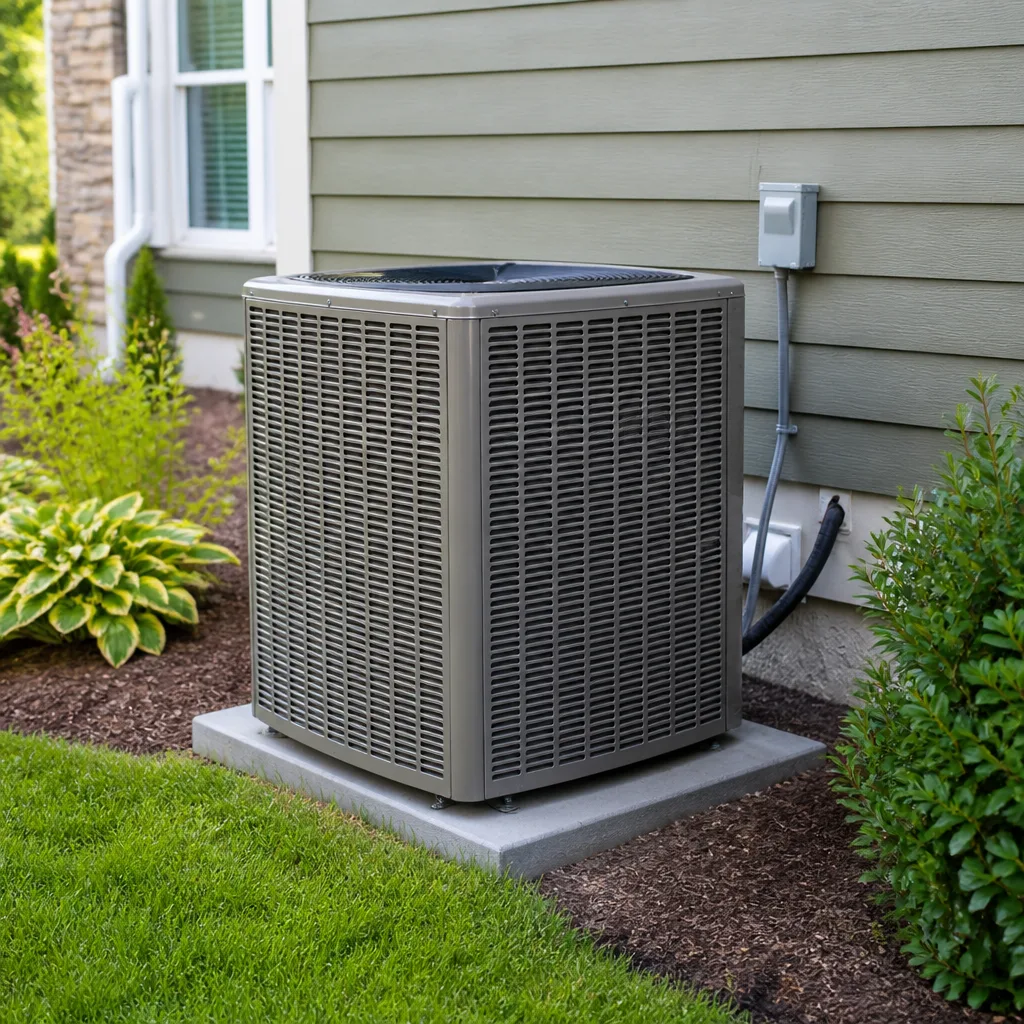 AC repair
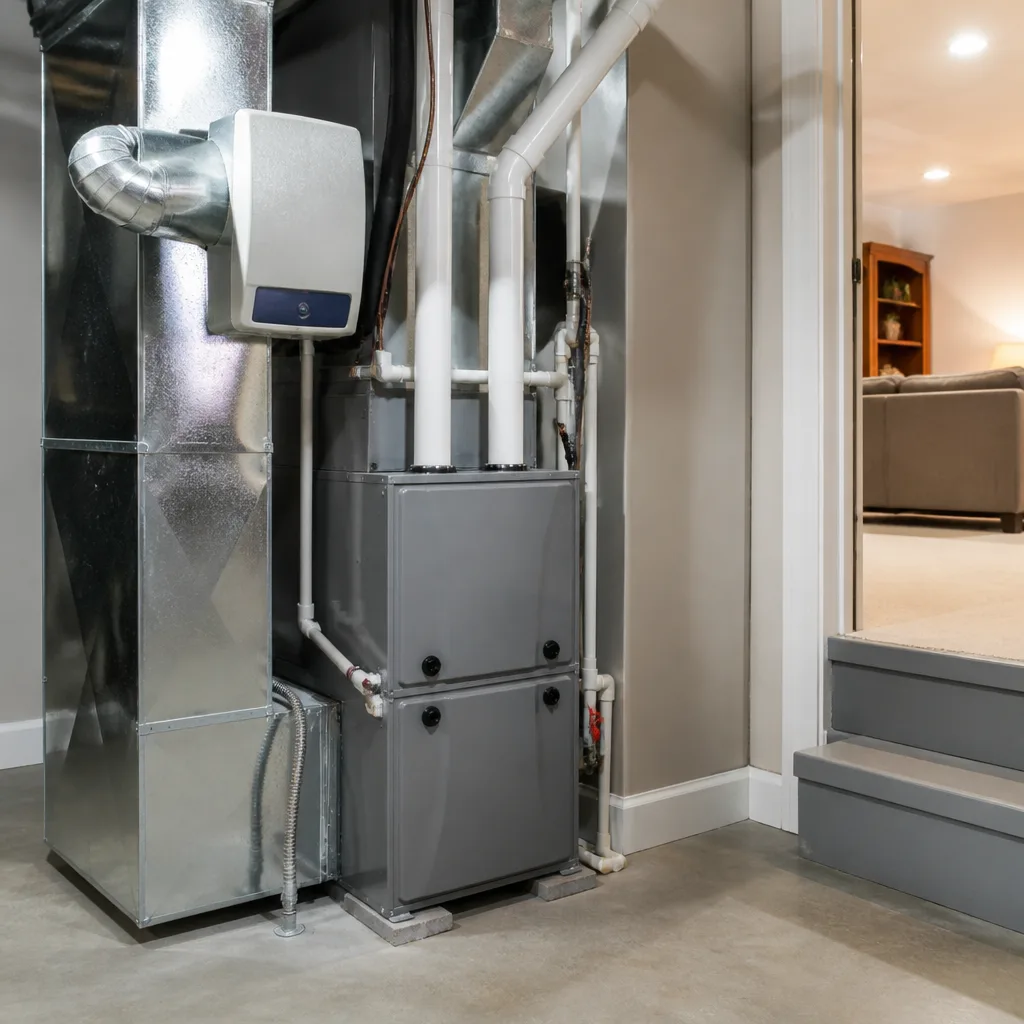 Furnace & heating
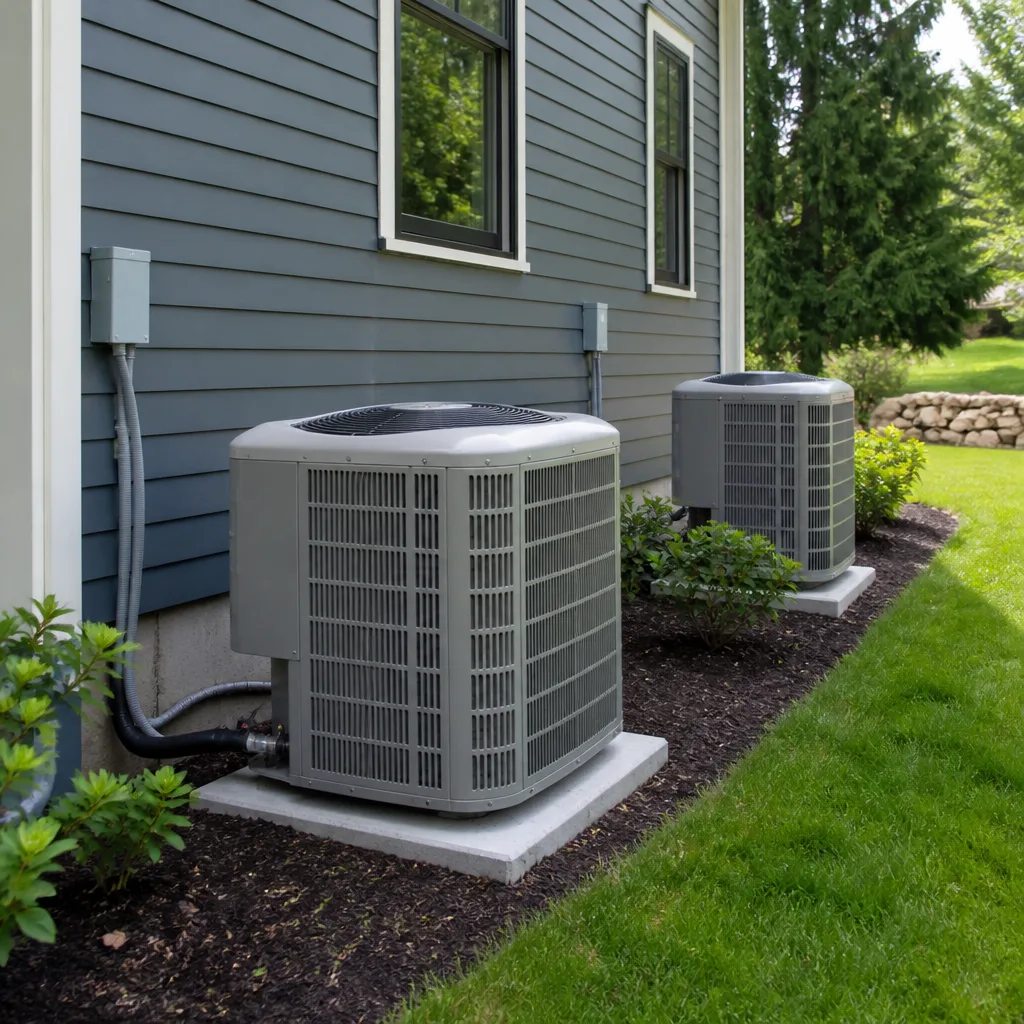 Heat pumps
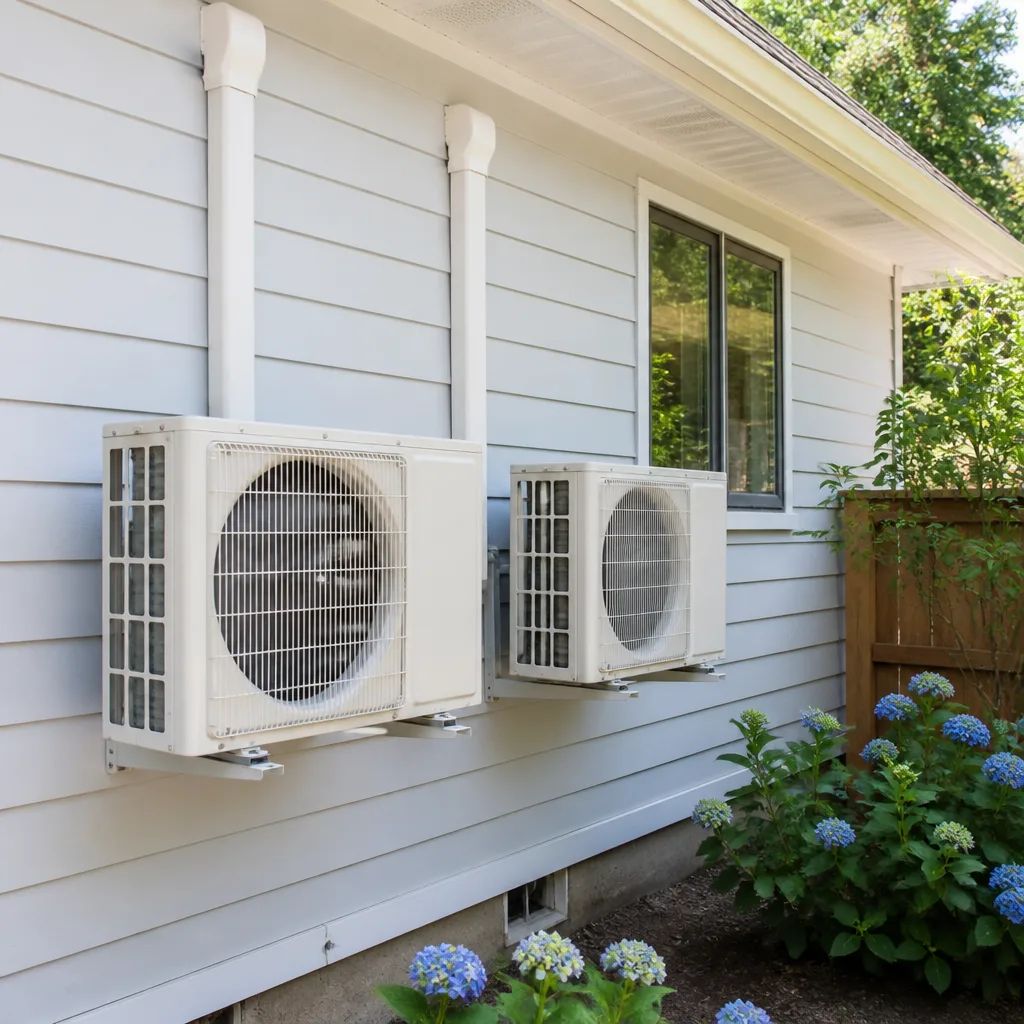 Ductless mini splits
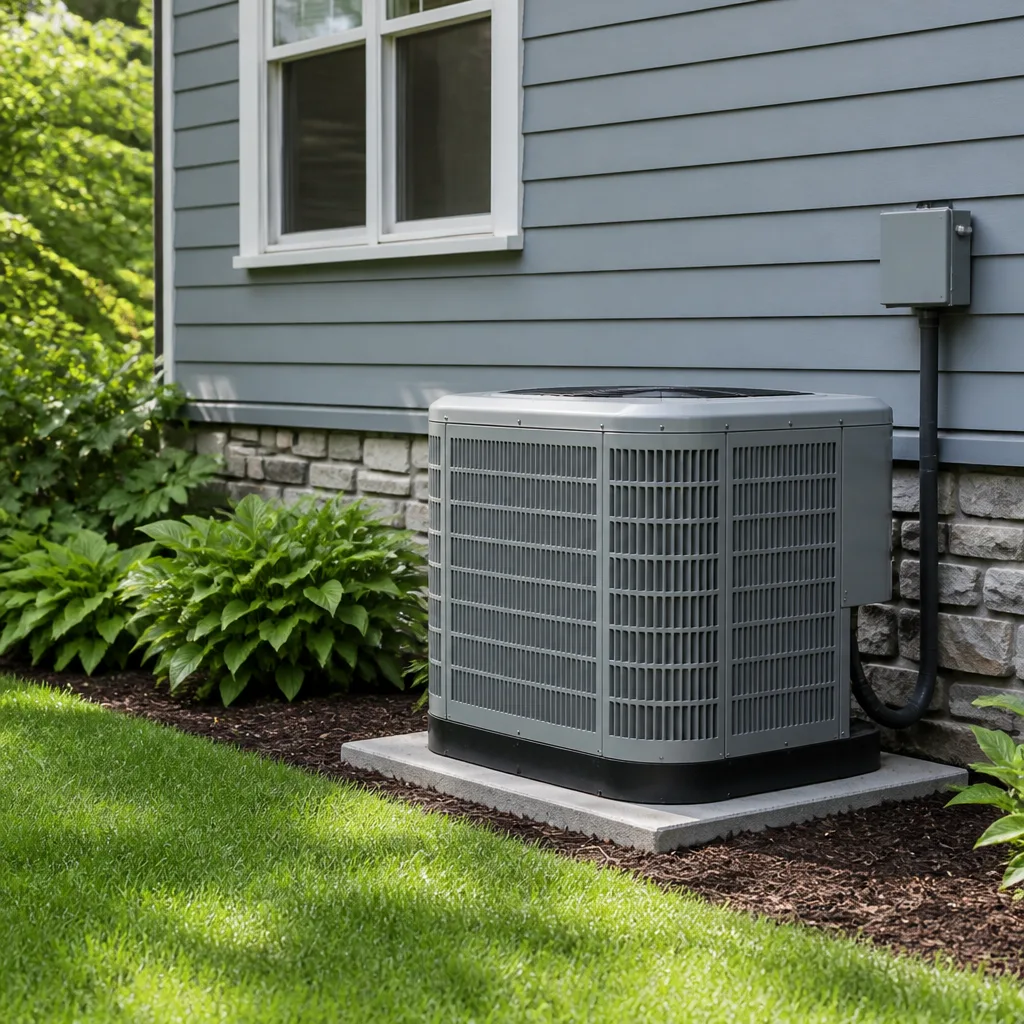 Carrier
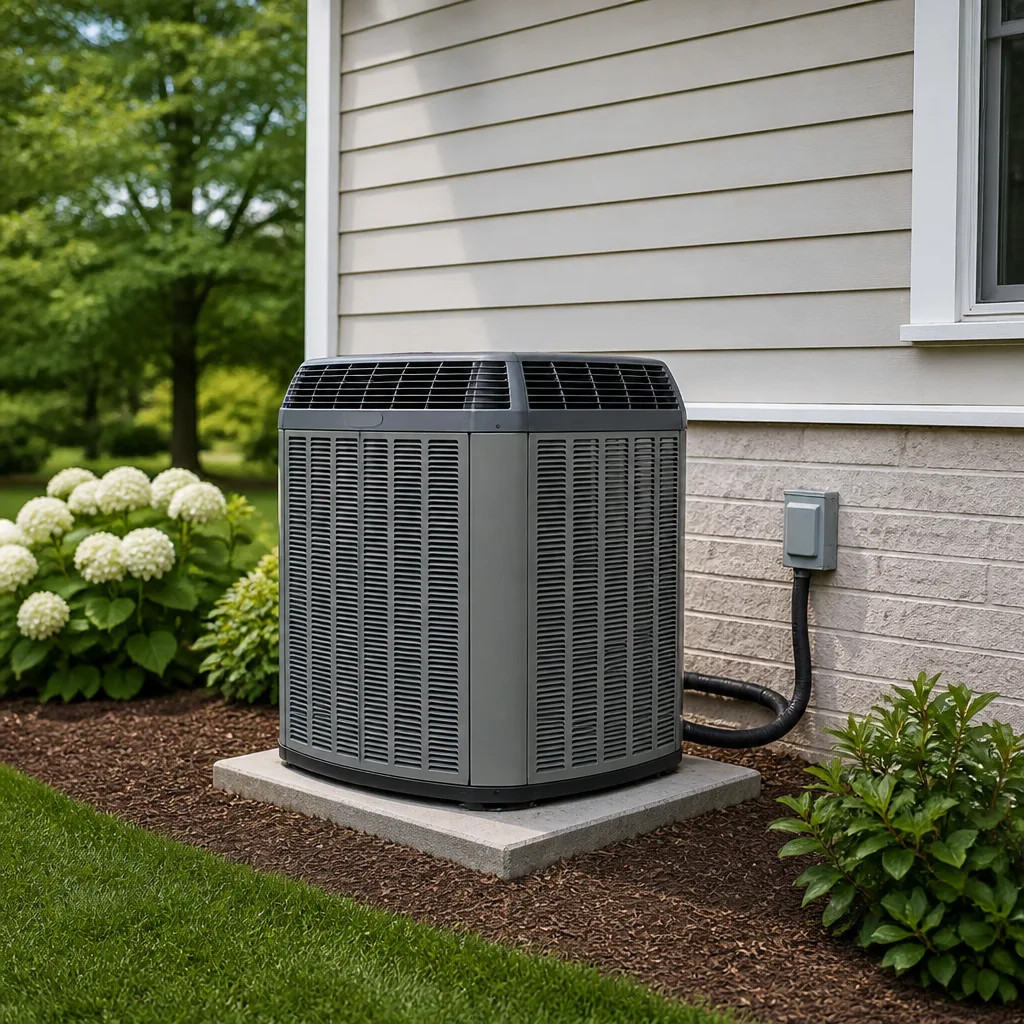 Trane
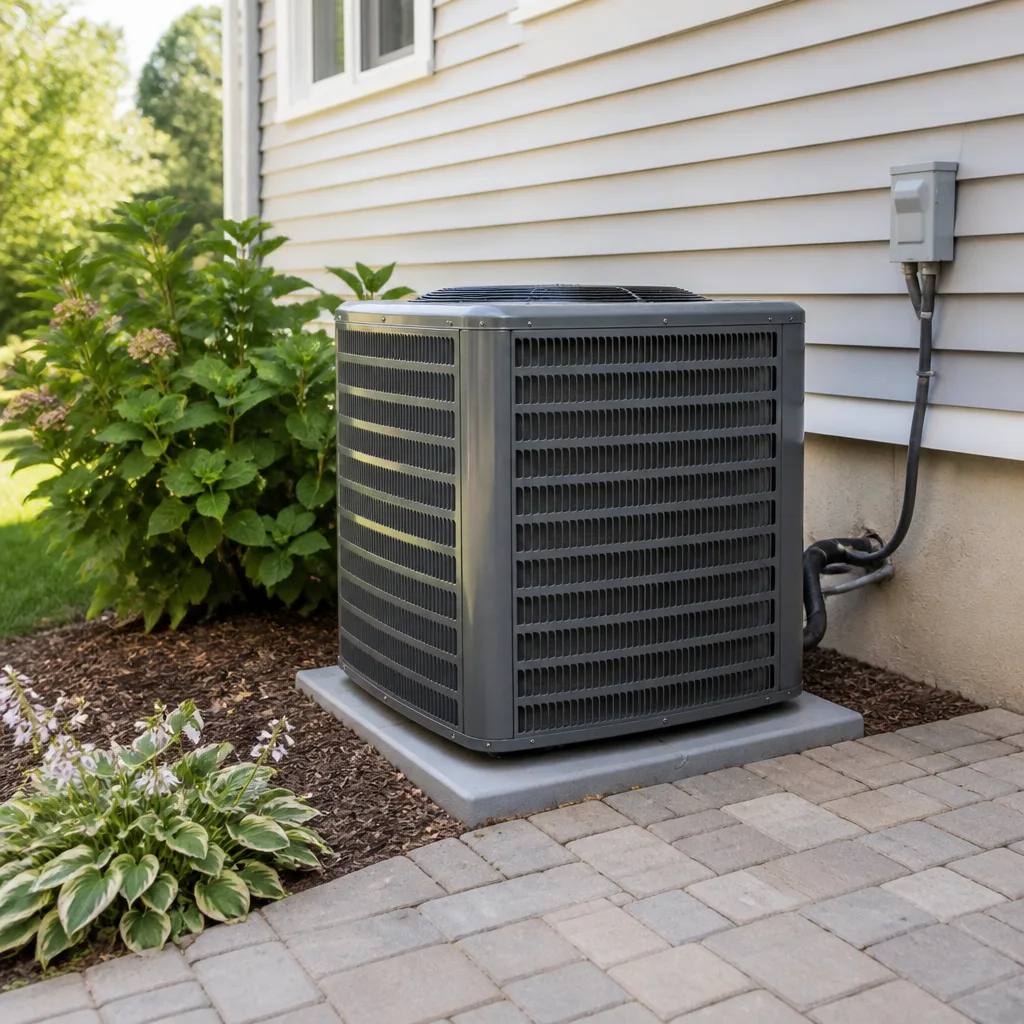 Goodman
Seasonal tune-up and full diagnostic on your Carrier, Trane, or Goodman system - readings shown to you before any repair is proposed
Diagnosis first, numbers second - you approve the repair price before a single part goes in.
Get your free estimateHVAC Emergency Preparedness Guide for Spring Hill Homes
Most homeowners in Spring Hill think of a broken AC as a hassle: a hot night, a sweaty morning, a call to the shop. That framing is wrong, and it’s dangerous. Hernando County’s population skews older than the Florida average, and for a 70-year-old living alone, a 95°F interior during a summer failure can turn into a heat stroke situation in under four hours. The plan you have before the failure is the entire point. This guide covers the temperature thresholds that matter, a 48-hour emergency kit, how to slow heat gain in a Spring Hill home while you wait, what dispatchers actually triage on, and the low-cost preventive steps that keep emergencies rare.
Quick Answer
An HVAC emergency plan for a Spring Hill home means three things: knowing the indoor temperature and humidity at which a failure becomes a health event (roughly 85°F sustained, lower for infants, elderly residents and anyone with heart or lung conditions), having a 48-hour kit and identified cooling locations ready before you need them, and knowing exactly what to say to a dispatcher so a genuine heat emergency gets prioritized. Pair that plan with preventive basics – a monitored smart thermostat, an annual check of the capacitor, a spare filter – and you cut the odds of a July breakdown in the first place.
Styles & brands we work with
- AC repair
- Furnace & heating
- Heat pumps
- Ductless mini splits
- Carrier
- Trane
- Goodman
Table of Contents
- When Does an AC Failure Become Dangerous?
- The 48-Hour AC Failure Kit
- How to Slow Heat Gain in a Spring Hill Home
- What to Tell the Dispatcher During a Heat Emergency
- Preventive Infrastructure That Prevents Emergencies
- A Seasonal Pre-Summer Checklist
- Humidity, Not Just Heat
- Common Mistakes to Avoid
When Does an AC Failure Become Dangerous?
The danger line isn’t a single number. It depends on who’s in the house. For a healthy adult, an indoor temperature in the high 80s is uncomfortable. For an infant, an elderly resident, or someone with a heart or respiratory condition, that same temperature can escalate quickly, because those groups regulate body heat less efficiently and dehydrate faster. Humidity makes it worse: at 90°F and 70% relative humidity, the body can’t cool itself through sweat the way it can in dry air, so the effective heat load climbs.
In our experience across Spring Hill, the mistake people make is waiting for the house to “get really hot” before treating it as urgent. By the time a home is above 90°F inside, you’ve already lost the window to move an at-risk family member somewhere cool. The thresholds worth writing down:
- Healthy adults: discomfort begins in the mid-80s; treat anything sustained above 85°F as a prompt to act.
- Infants and children under five: act earlier, around 80 – 82°F, because they heat up faster and can’t always tell you they’re struggling.
- Adults 65 and older: act around 80°F, and don’t wait for them to complain. Age reduces thirst sensation and heat perception.
- Anyone with heart, lung or kidney conditions, or on medications affecting sweating: treat any sustained indoor temperature above 80°F as a reason to relocate or call for priority service.
Hernando County’s older-than-average population makes this personal for a lot of Spring Hill households. A neighbor who checks in on an elderly parent, or a couple in their seventies living independently, needs a plan more than a young family does. If you’re caring for an older relative in Spring Hill, agree in advance on the temperature at which they call you, and the temperature at which they leave the house.
The 48-Hour AC Failure Kit
Assemble this before summer, not during a failure. The goal is two days of self-sufficiency while a repair gets scheduled – not a permanent life without air conditioning.
- Two battery-powered or rechargeable fans. Box fans move air; handheld fans keep a person cool. Batteries or a power bank matters because the failure that takes out your AC can take out the outlet.
- A battery-powered thermometer and hygrometer. You need to know the actual indoor temperature and humidity, not your guess. Put one in the room where an at-risk family member sleeps.
- Bottled water and electrolyte packets. Dehydration is the mechanism behind most heat illness. A case of water and a few electrolyte sachets is cheap insurance.
- A written list of cool places nearby. In Spring Hill that means the public library branches, the Hernando County community centers, and any big-box store like Walmart that stays air conditioned. Write down the addresses and hours on paper so nobody has to figure it out while overheated.
- An overnight alternative. Identify a friend, relative or hotel in advance where an at-risk person can sleep if the repair slips into a second night.
- Phone numbers, written down. Your HVAC provider and the nearest urgent care. Include our line at (833) 946-7618.
- Cooling towels or damp cloths. A wet cloth on the neck and wrists helps more than people expect.
A kit like this costs less than one emergency service call and it’s the difference between a rough afternoon and a medical event. Store it in a closet you’ll remember, and check the batteries each spring.
How to Slow Heat Gain in a Spring Hill Home
While you wait for a technician, the correct goal is slowing how fast the house heats up, not trying to cool it. Some actions move the needle. Others just feel productive.
What actually helps:
- Close blinds and curtains on sun-facing windows. West-facing windows collect the most afternoon heat in a Spring Hill summer. Blocking direct sun can make a real difference within an hour.
- Stop using the oven, stove, dryer and dishwasher. Every one of these dumps heat into the house. Skip them until the repair is done.
- Shut doors to rooms you don’t use. Less volume to cool means the remaining rooms heat more slowly, and it concentrates whatever cooler air you have.
- Run fans, but understand what they do. Fans don’t lower air temperature. They increase evaporative cooling on skin and they help push hot air out a window when you set up cross-ventilation.
- Open windows at night if the outdoor air is cooler than indoors. In Spring Hill that sometimes works after dark, but check the outdoor temperature first. If the outside air is hotter than the inside, opening a window makes things worse.
What feels productive but doesn’t move the needle:
- Standing in front of a fan misting yourself without drinking water. It cools you temporarily and masks dehydration.
- Opening every window on a 95°F afternoon. You’re letting hot, humid air in, and that moisture stays in the furniture and walls.
- Running the thermostat lower hoping it’ll kick on. If the system is down, the setting does nothing.
The bigger lever is knowing whether the failure is total or partial. If some rooms still get cool air, you’re managing a failing system. If nothing does, treat it as a full outage and move to the kit plan. If your system has stopped entirely and it’s the middle of summer, our furnace repair crew also handles AC diagnostics, so one call covers either side of the system.
What to Tell the Dispatcher During a Heat Emergency
Service companies triage. During a July heat wave in Spring Hill, every shop gets more calls than it can run that day, so the dispatcher is making a judgment about who goes first. Knowing what they listen for puts you on the front of the line when you genuinely need it.
Here’s what a dispatcher is tracking, roughly in order of urgency:
- Health risk in the home. Infants, elderly residents living alone, anyone with a respiratory or heart condition, or anyone with mobility limits. Say it plainly: “My 82-year-old mother lives here alone and the house is at 88.” That is the single biggest factor.
- Current indoor temperature. Not “it’s hot.” Give the number, from the thermometer in your kit.
- Whether the system is completely dead or partially cooling. Partial cooling buys more time than a total outage.
- How long this has been happening. A failure that started this morning is a different situation than one that’s stretched into a second day.
- What the system is doing. Is there any air from the vents? Is it warm air? Is there ice on the outdoor unit? Is the breaker tripped? Any of that helps the tech arrive prepared.
What doesn’t help: describing the problem vaguely, burying the health detail, or calling three shops and taking the first one available without telling them what’s at stake. Call us at (833) 946-7618 and lead with the person at risk. We answer 24/7. Fast dispatch from 7am to 7pm, Sunday through Friday. A call outside dispatch hours is booked into the next opening, so get it on the schedule early rather than waiting for the house to cross 90°F.
Preventive Infrastructure That Prevents Emergencies
The best emergency response is one you never needed. Three pieces of infrastructure do most of the work for Spring Hill homes.
1. A smart thermostat with remote monitoring
A thermostat that alerts your phone when the indoor temperature climbs while the system is set for cooling gives you hours of warning. That’s the difference between scheduling a repair during the day and coming home to a house at 92°F. It also tells you whether the system is running (the air handler is on) versus dead (nothing), which helps you describe the failure accurately.
2. An annual capacitor inspection
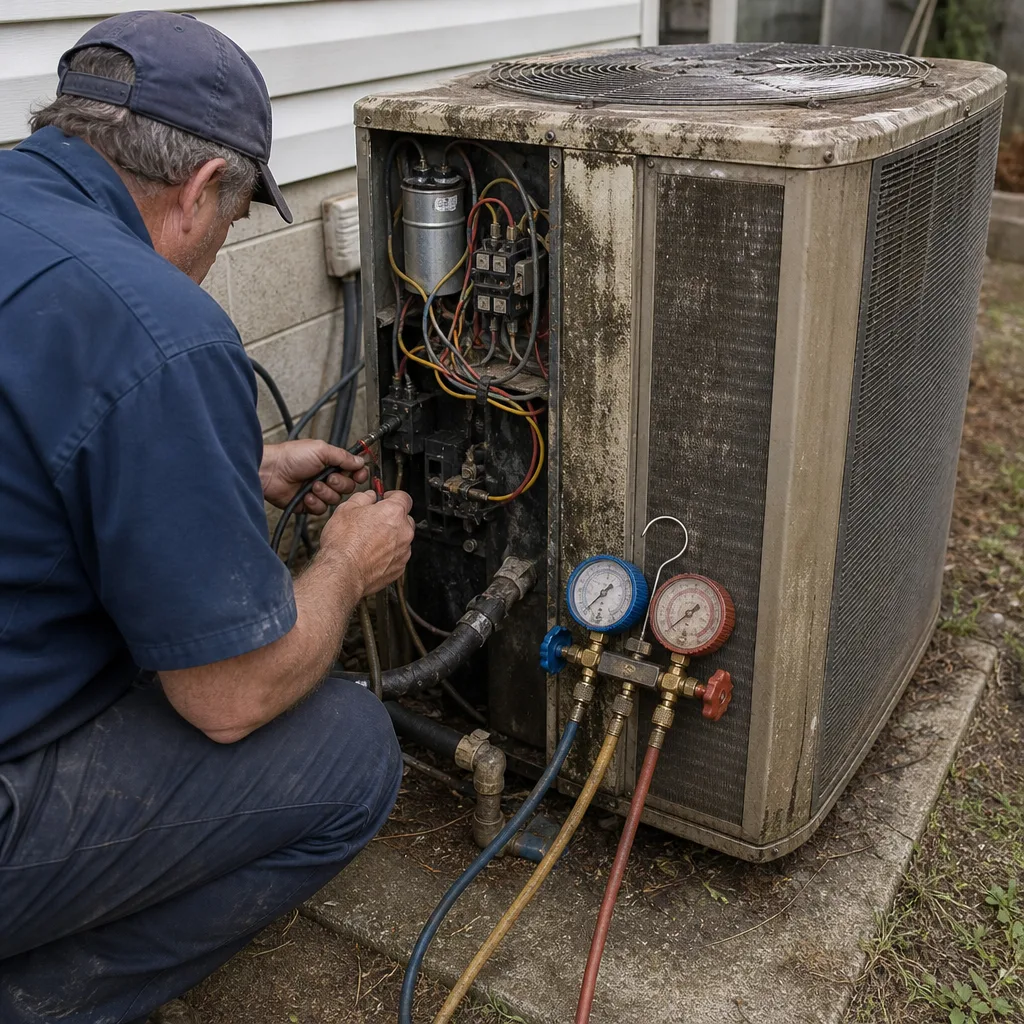
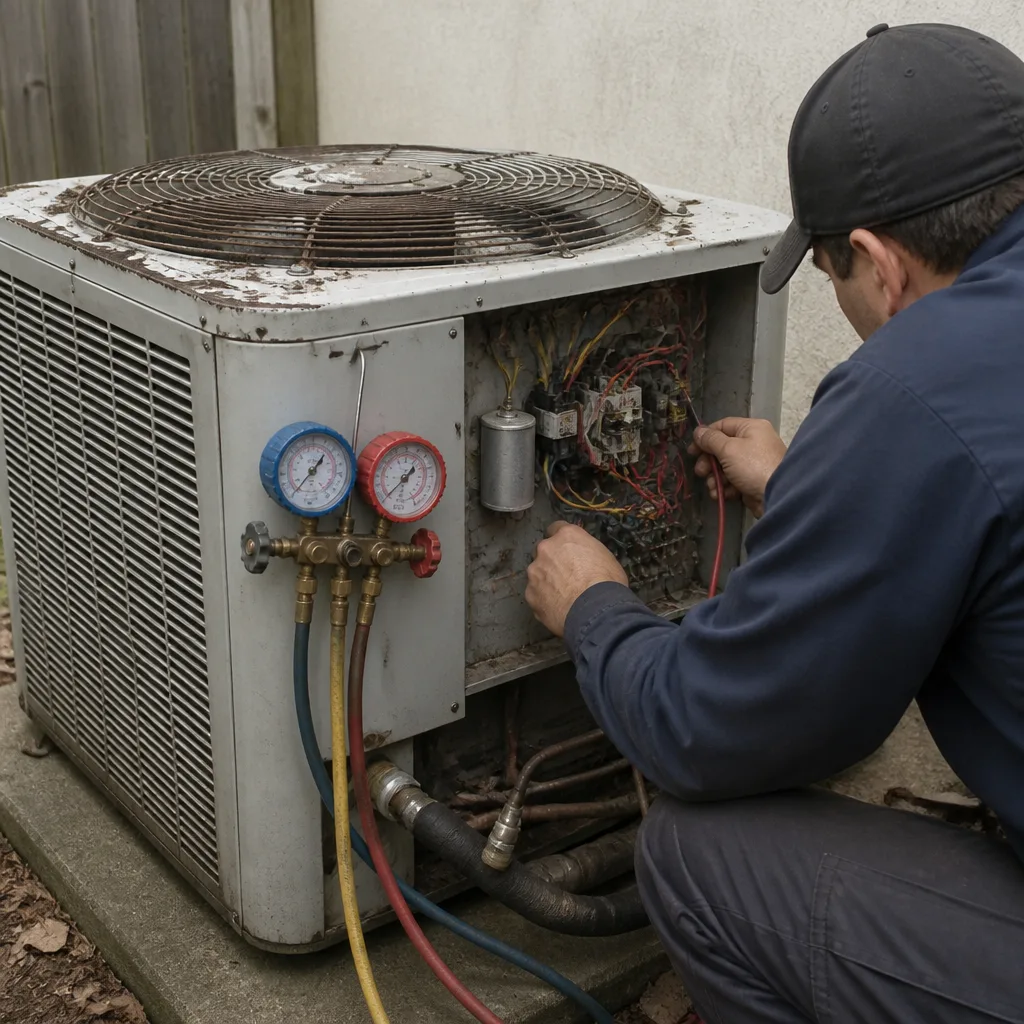
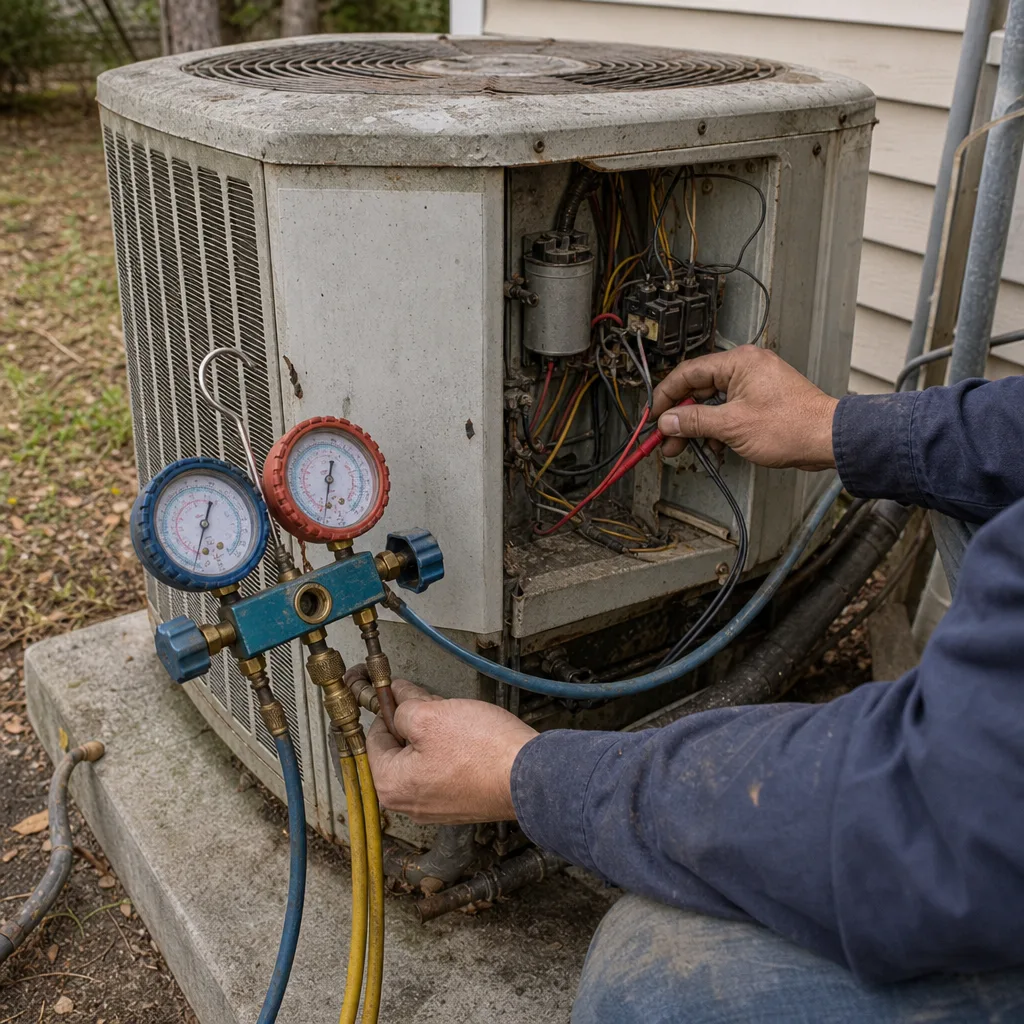
If we had to name the single most common component failure we see on summer AC calls in Spring Hill, it’s the run capacitor. This is a small part that stores the energy that gets the compressor and fan motor started. When it weakens, the system struggles to start, pulls higher current, and eventually just quits. A capacitor is inexpensive to test and replace proactively, and it’s the part that turns a “system’s working fine” July into an emergency. Have it checked before summer.
3. A spare filter on hand
A clogged one-inch filter restricts airflow, which makes the system work harder and heats up the compressor. Keeping a spare filter and changing it on schedule is the lowest-cost thing you can do to prevent a failure. In Spring Hill’s summer dust and pollen, a filter that’s supposed to last 90 days can be loaded up well before then. Check it monthly during summer.
If you’re already overdue on a check, an AC installation assessment is also the right time to find out whether your current system is worth repairing or nearing the end of its life. We’ll tell you honestly, whichever way it goes.
A Seasonal Pre-Summer Checklist
This is the checklist to run through every spring, before the first real heat wave. It takes an afternoon and it prevents most of the emergency calls we get.
- Schedule a tune-up before the season. Get the system looked at while it’s cool, not during the rush. That’s when a technician has time to find a weak capacitor or a low charge before it fails.
- Test the thermostat. Confirm it holds a set temperature and that the alerts reach your phone.
- Change the filter. Start the season with a fresh one and put a spare in the closet.
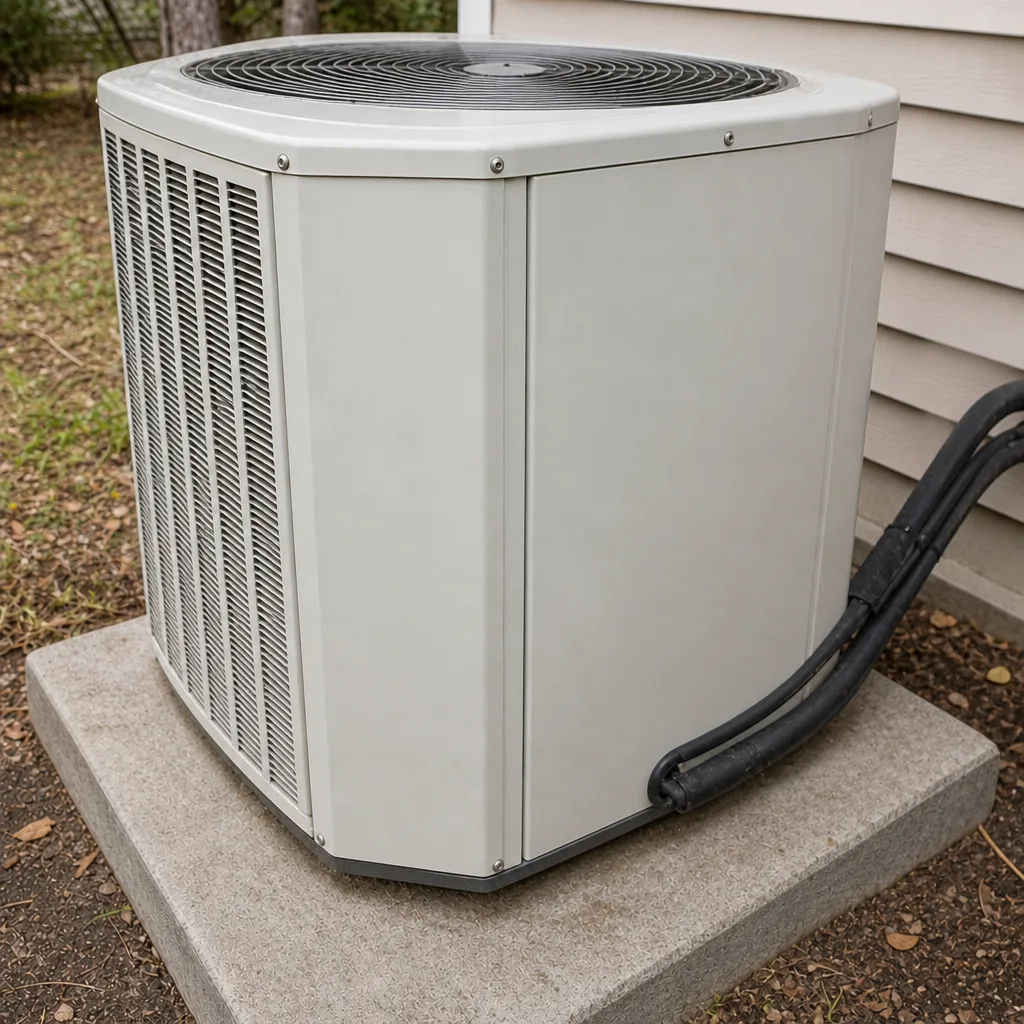
- Clear debris from the outdoor unit. Trim back shrubs and check that nothing has piled up against the condenser.
- Assemble the 48-hour kit. Batteries, fans, water, written cooling-center list, written phone numbers.
- Confirm your health-risk household members have a plan. Temperature thresholds, who they call, where they go.
- Check the outdoor unit’s breaker and disconnect. Note it’s in good shape so you’re not searching in a crisis.
Owning a home in Spring Hill means living with summer heat that doesn’t take the day off. If your equipment is getting older, be honest about it during the tune-up rather than waiting for it to fail in July. A brand-agnostic HVAC specialist can help you plan for a replacement on your schedule instead of an emergency one. When it’s time for a new system, our team handles Carrier, Trane, Lennox, Goodman, Rheem, York, Daikin, Bryant, and American Standard, so the recommendation is driven by your home, not by a single manufacturer’s margin.
Humidity, Not Just Heat
A working AC does two jobs: it cools the air and it removes moisture. When the system fails in Spring Hill, the heat gets the attention, but the humidity is the quiet threat. High indoor humidity makes a 85°F house feel like 95°F because your body can’t shed heat through sweat. It also creates the conditions for mold growth in walls, furniture and ductwork if it’s left long enough.
During an outage, keep interior doors open in the areas you’re not using so air circulates, and don’t add moisture by running the dishwasher or taking hot showers if you can avoid it. If the repair is going to take more than a day, moving at-risk people out is the right call regardless of the humidity. Households with infants, elderly residents or anyone with a respiratory condition should treat an extended outage as a reason to leave, not to tough it out.
If you’ve had water intrusion or a long outage and you’re worried about humidity damage afterward, run the system and watch for mold smells in the vents. That’s a sign to get an inspection before the season gets busy again. For more on our coverage of Spring Hill homes, our team is a call away.
Common Mistakes to Avoid
- Assuming “it’s hot” is the whole message. Dispatchers need a number and a person. “The house is at 90 and my mother is 84” gets a different response than “it’s not working.”
- Skipping the pre-summer tune-up because the system “seems fine.” A weak capacitor and a low refrigerant charge don’t announce themselves. They fail on the hottest day, and that’s when everyone else is calling too.
- Opening all the windows on a 95°F Spring Hill afternoon. You let in hot, humid air that then has to be conditioned out. It feels cooler at the window and makes the rest of the house worse.
- Running the oven or dryer during a failure. It adds heat to a house that’s already struggling. Wait for the repair.
- Not having a written list of cool places. In a heat emergency, nobody should be scrolling on a hot phone trying to remember the library’s address.
- Letting an elderly relative “decide for themselves” whether it’s too hot. Age reduces heat perception. Set the threshold in advance and act on it.
- Waiting out a failure when a health risk is present. A second day without air conditioning in a Spring Hill July is a medical decision, not a scheduling one.
See the difference
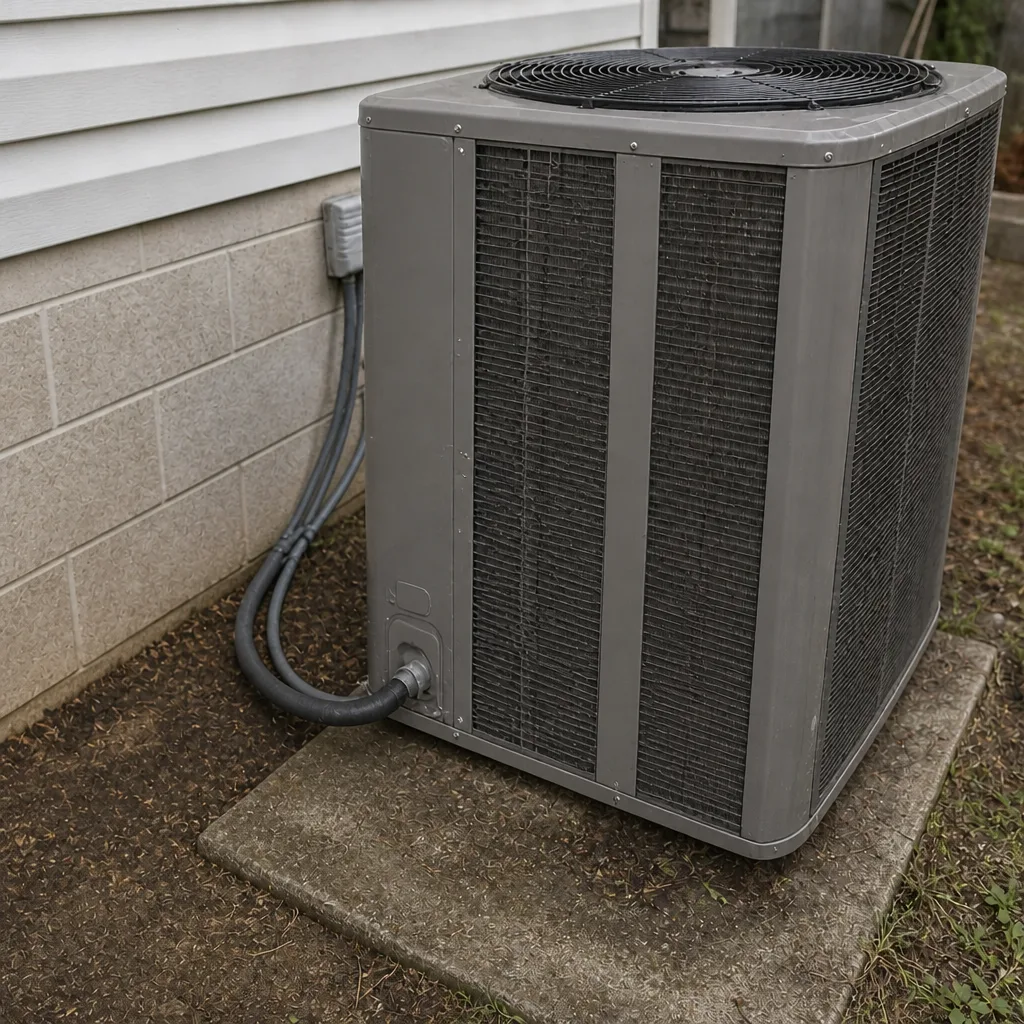
 Before
 After
 Before
 After
 Before
 After
When to Call a Professional
Call for service when the system stops cooling entirely, when indoor temperature is climbing past 80°F with a health-risk person in the home, when the outdoor unit is iced over, when the breaker trips on its own, or when you smell a burning or musty odor from the vents. Call when the system runs but delivers only warm air: that’s usually a refrigerant, compressor or capacitor issue, and none of those are things to solve yourself. Our technicians have up to experience, and we diagnose first and recommend second, so you know what you’re dealing with before any work is quoted. Ironside AC Repair offers free estimates in Spring Hill – call (833) 946-7618. We answer 24/7. Fast dispatch from 7am to 7pm, Sunday through Friday.
Frequently Asked Questions
Treat it as an emergency at around 80°F if there’s an infant, an adult 65 or older living alone, or anyone with a heart, lung or kidney condition in the home. For healthy adults, act once the house is sustained above 85°F. Don’t wait for symptoms to appear. Call (833) 946-7618 and move at-risk family members to a cool location while you wait.
First, check that the thermostat is set to cool and the breaker hasn’t tripped. If the system is completely dead and the house is getting hot, move to your emergency plan: close blinds, stop using heat-producing appliances, run fans, and call for service. If the house is above 80°F with an at-risk person inside, relocate them and tell the dispatcher why. Estimates are free, so call us for an exact quote.
Close blinds on sun-facing windows, stop using the oven, stove, dishwasher and dryer, and shut doors to rooms you’re not using. Fans help people feel cooler but don’t lower air temperature. Only open windows if the outdoor air is cooler than the indoor air. Call (833) 946-7618 to get on the schedule as early as possible.
Dispatchers prioritize health risk first: infants, elderly residents living alone, people with medical conditions or mobility limits. Then they look at the current indoor temperature, whether the system is completely dead or partially cooling, and how long the outage has lasted. Say the health risk plainly and give a temperature number. We answer 24/7, and fast dispatch runs from 7am to 7pm, Sunday through Friday, so call (833) 946-7618 early.
Yes. The run capacitor helps start the compressor and fan motor, and when it weakens the system strains to start, draws more current and eventually quits. It’s one of the most common summer failures we see in Spring Hill and one of the cheapest to prevent. Have it checked during your pre-summer tune-up. Call (833) 946-7618 for a free estimate.
For healthy adults in a house that stays under 85°F, waiting until morning is reasonable. For anyone with a health risk, or once the indoor temperature passes 85°F, call a professional and use your emergency plan. Heat illness can escalate in a few hours. Call (833) 946-7618 – we answer 24/7 and dispatch from 7am to 7pm, Sunday through Friday.
The Bottom Line
An HVAC emergency in Spring Hill is a safety event before it’s a comfort problem. Know the temperature that matters for each person in your home, keep a 48-hour kit with fans, a thermometer, water, and a written list of cool places, and know what to say to a dispatcher so a health risk gets prioritized. The preventive side is just as important: a monitored smart thermostat, an annual capacitor check, and a spare filter on hand prevent most July breakdowns. Build the plan now, while the system is running.
When you do need service, get an honest diagnosis first. Ironside AC Repair works on your brand – AC installation, furnace repair and everything across the equipment lifecycle. Call (833) 946-7618 for a free estimate. We answer 24/7. Fast dispatch from 7am to 7pm, Sunday through Friday.
Written by the team at Ironside AC Repair.